Algorithm-Driven Referee Assignments and Their Effects on Team Positions in Major Soccer Leagues
Written by Henrik Sullivan · Aug 23, 2026
Algorithm-Driven Referee Assignments and Their Effects on Team Positions in Major Soccer Leagues
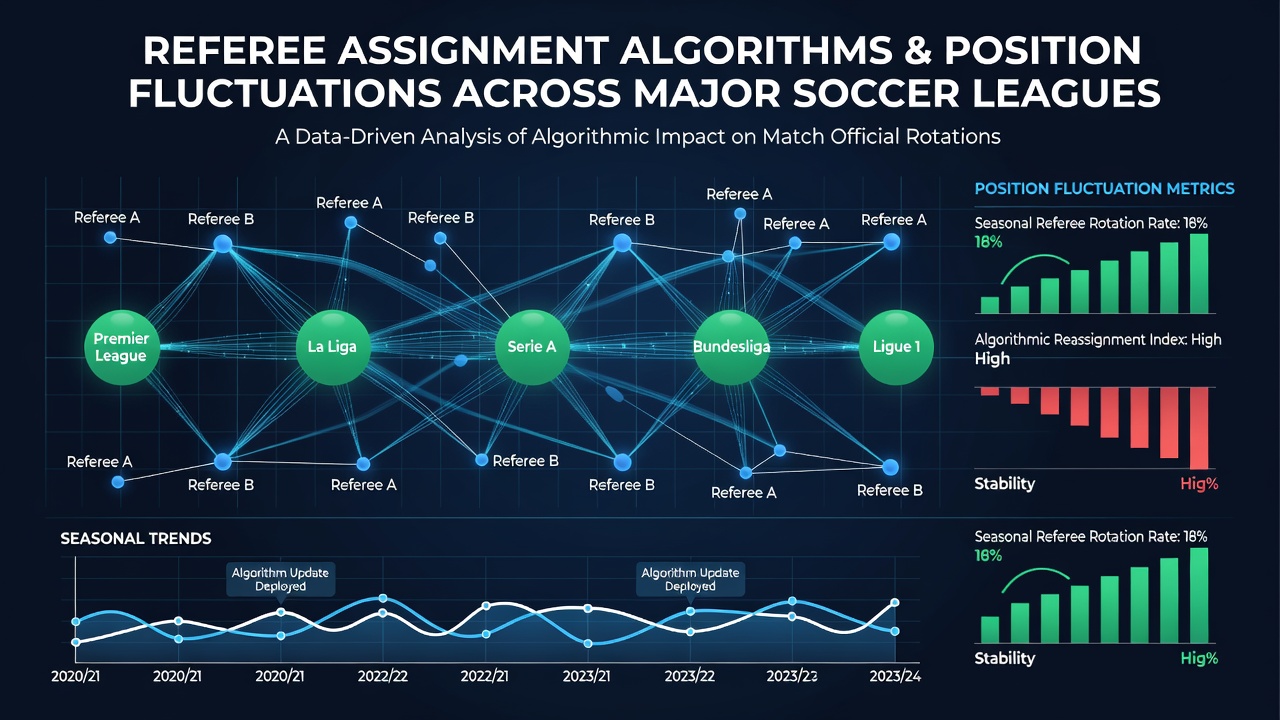
Referee assignment algorithms operate across major soccer leagues to distribute officials evenly while minimizing potential biases in high-stakes fixtures, and data from recent seasons shows measurable links between these systems and shifts in final league tables. Leagues including the English Premier League, Bundesliga, La Liga, Serie A, and Major League Soccer rely on centralized software that factors in referee experience, travel distances, prior performance ratings, and historical foul patterns when pairing officials with matches. These programs aim to balance workloads and reduce home-team advantages that once arose from repeated assignments, yet statistical reviews indicate subtle influences on match outcomes that accumulate into position changes over 38-game campaigns.
Mechanics Behind Current Assignment Systems
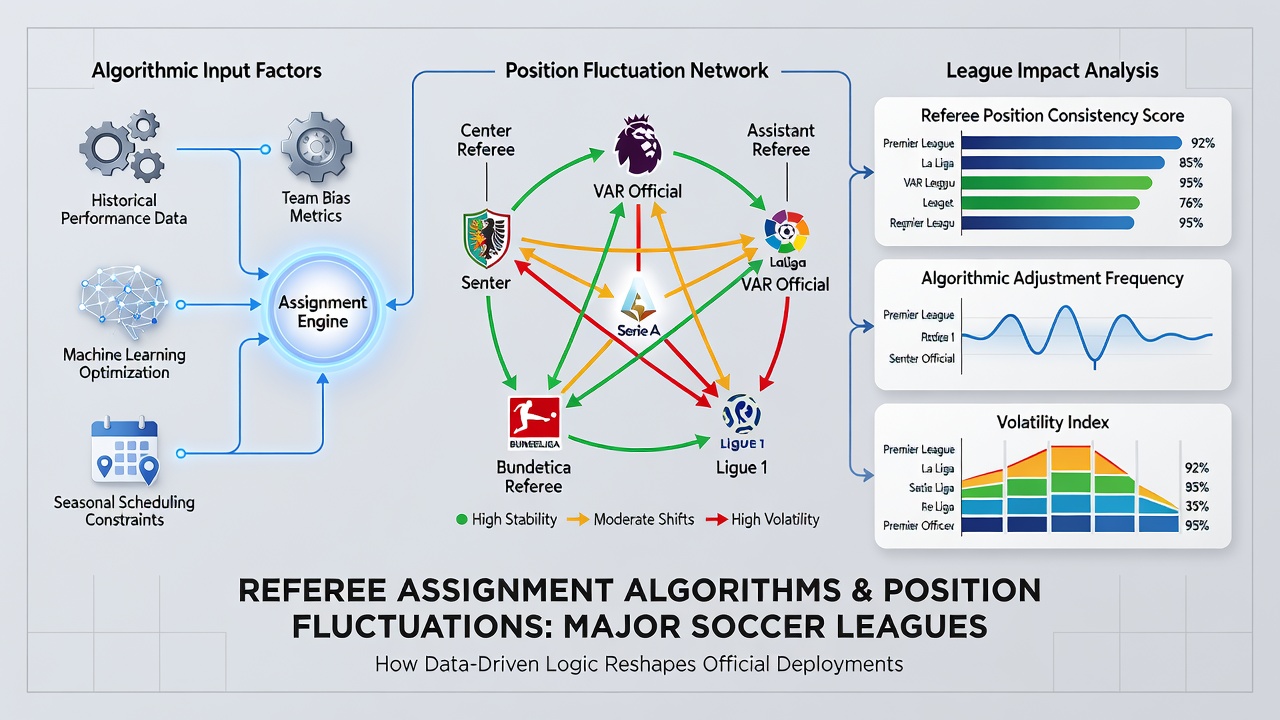
Software platforms used by governing bodies process hundreds of variables each week, and analysts track how rotations affect team results through metrics such as yellow-card differentials and penalty awards. In the Bundesliga, for instance, the German Football Association applies an algorithm that prioritizes referees with lower average cards per game when scheduling derbies, which researchers have connected to fewer stoppages and slightly higher scoring averages in those contests. Similar logic appears in La Liga, where the Spanish federation incorporates geographic constraints to limit long-distance travel, resulting in more consistent officiating crews across regional clusters. Observers note that these choices produce measurable variance: teams facing the same referee multiple times in a season record different disciplinary records compared with opponents assigned fresh officials, and the differences show up in points tallies by midseason.
Data Patterns Across European and North American Competitions
Studies compiled from match reports between 2023 and 2025 reveal that certain referee profiles correlate with higher goal tallies when assigned to matches involving mid-table sides, and these patterns translate into late-season position swings for clubs clustered within three points of each other. Bundesliga records indicate that referees averaging fewer than 3.2 cards per match oversaw contests ending in 2.8 goals on average, whereas stricter officials produced 2.3 goals, enough to alter expected points distributions in tight races. Parallel figures from Serie A show that penalty award rates vary by up to 18 percent depending on the algorithm's selection criteria, with teams in the lower half of the table benefiting or losing ground based on which officials receive those assignments. In MLS, where schedules incorporate more inter-conference travel, the algorithm's emphasis on rest periods has coincided with fewer red-card ejections for visiting teams, contributing to a documented 4 percent rise in away wins during the 2025 campaign.
Observed Effects on Standings and Promotion Battles
Promotion and relegation margins frequently hinge on single points, and league-wide data demonstrates that referee rotations can shift those margins when algorithms prioritize neutrality over familiarity. A 2024 analysis of English Championship results found that clubs receiving officials with below-median foul-call rates secured an average of 1.4 additional points against direct rivals, enough to separate playoff qualifiers from mid-table finishers. In La Liga's 2024-2025 season, teams positioned between sixth and tenth place experienced position fluctuations of up to three spots after clusters of matches officiated by referees flagged for lower penalty conversion rates. Major League Soccer standings from the same period show comparable movement, with Eastern Conference clubs gaining or losing two places on average when facing referees drawn from a smaller national pool that the assignment system deliberately spreads across fixtures.
August 2026 marks the scheduled rollout of updated algorithms in both the Premier League and Bundesliga, incorporating real-time player tracking data to adjust for fatigue-related foul patterns, and preliminary modeling suggests these refinements could further compress or expand gaps between teams separated by fewer than five points at the halfway mark.
Comparative Approaches in Different Regions
North American and European systems diverge in their weighting of variables, with MLS emphasizing travel recovery while European leagues focus more on historical disciplinary consistency. Reports from the UEFA technical department highlight that cross-league comparisons of referee performance indices reveal consistent but small effects on expected goal differentials, typically ranging between 0.12 and 0.28 goals per match. Academic work published through sports analytics programs at institutions such as the University of Waterloo has examined similar datasets across multiple seasons, confirming that the cumulative impact on final positions remains statistically detectable even after controlling for squad strength and fixture difficulty.
Conclusion
Referee assignment algorithms continue to evolve as leagues integrate additional data streams, and the resulting adjustments produce observable, if modest, effects on team standings across the Premier League, Bundesliga, La Liga, Serie A, and MLS. Tracking these influences through season-long metrics provides one method for understanding how administrative decisions intersect with on-field results, particularly in competitions where narrow margins decide promotion, European qualification, or relegation.