Biometric Data Streams Shape Mid-Season Roster Moves Across European Hockey Leagues
Written by Henrik Sullivan · Aug 21, 2026
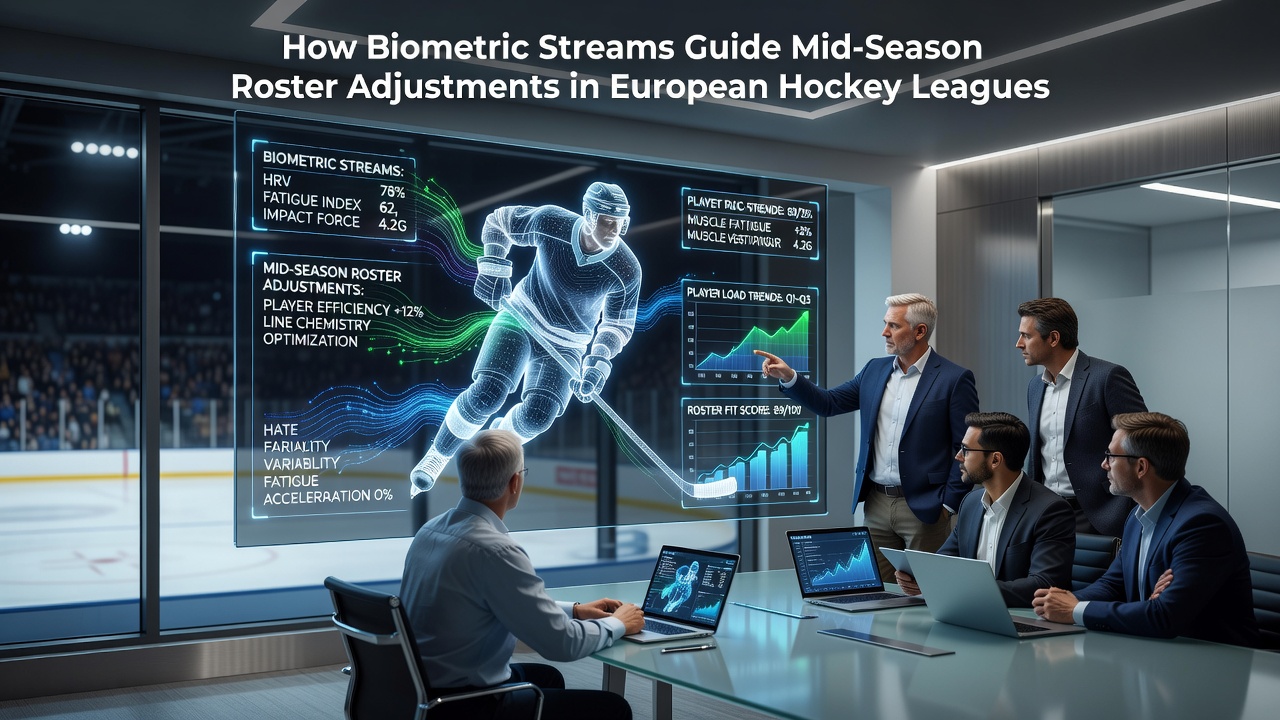
Biometric Data Streams Shape Mid-Season Roster Moves Across European Hockey Leagues
European hockey leagues have integrated biometric streams from wearable devices into daily operations, and these continuous data flows now influence roster adjustments during the winter months when standings tighten. Heart rate variability, acceleration patterns, sleep metrics, and muscle oxygen saturation levels arrive in real time from sensors embedded in jerseys and equipment, allowing teams in the Swedish Hockey League, Deutsche Eishockey Liga, and Kontinental Hockey League to track player readiness without relying solely on subjective reports from training staff.
Core Biometric Metrics Tracked in Professional Settings
Teams collect heart rate variability readings each morning to gauge recovery status, while GPS and inertial measurement units capture skating speed, change-of-direction frequency, and collision forces during practice and games. Muscle oxygen saturation sensors placed on the quadriceps provide additional insight into workload distribution across shifts, and researchers at institutions such as the University of Jyväskylä have documented how these combined streams correlate with on-ice performance decrements when thresholds are exceeded for consecutive days. Data shows that players whose heart rate variability drops below individualized baselines for three straight sessions face elevated injury risk, prompting coaches to shorten shifts or insert fresh skaters from the reserve list.
Mid-Season Application in League Play
By November and December, cumulative fatigue data guides decisions on trades and call-ups from affiliate clubs. A forward whose acceleration output declines steadily across back-to-back weekends may be rested or moved to a less demanding role, whereas a defenseman displaying stable recovery metrics despite heavy minutes becomes a candidate for expanded ice time. In August 2026, several clubs reviewed full-season biometric archives from the prior campaign to identify patterns that repeated during the January stretch run, then adjusted scouting priorities accordingly before the transfer window opened. These archives revealed that players with consistently high muscle oxygen saturation during third periods maintained better puck possession numbers, leading management groups to prioritize similar profiles in mid-season acquisitions.
Integration With Coaching and Medical Staff
Coaching staffs receive daily dashboards that combine biometric trends with traditional statistics such as shot attempts and zone time. Medical personnel cross-reference elevated collision loads with subsequent sleep disruptions, and this combined view supports conversations about lineup changes before morning skate. Observers note that leagues in Central Europe adopted standardized reporting formats earlier than their counterparts further east, yet all circuits now require clubs to log sensor data for league-wide injury surveillance programs run through the International Ice Hockey Federation. A 2024 joint report from the IIHF and the German Olympic Sports Confederation highlighted how teams using integrated biometric platforms reduced soft-tissue injury rates by measurable margins compared with clubs relying on conventional observation alone.
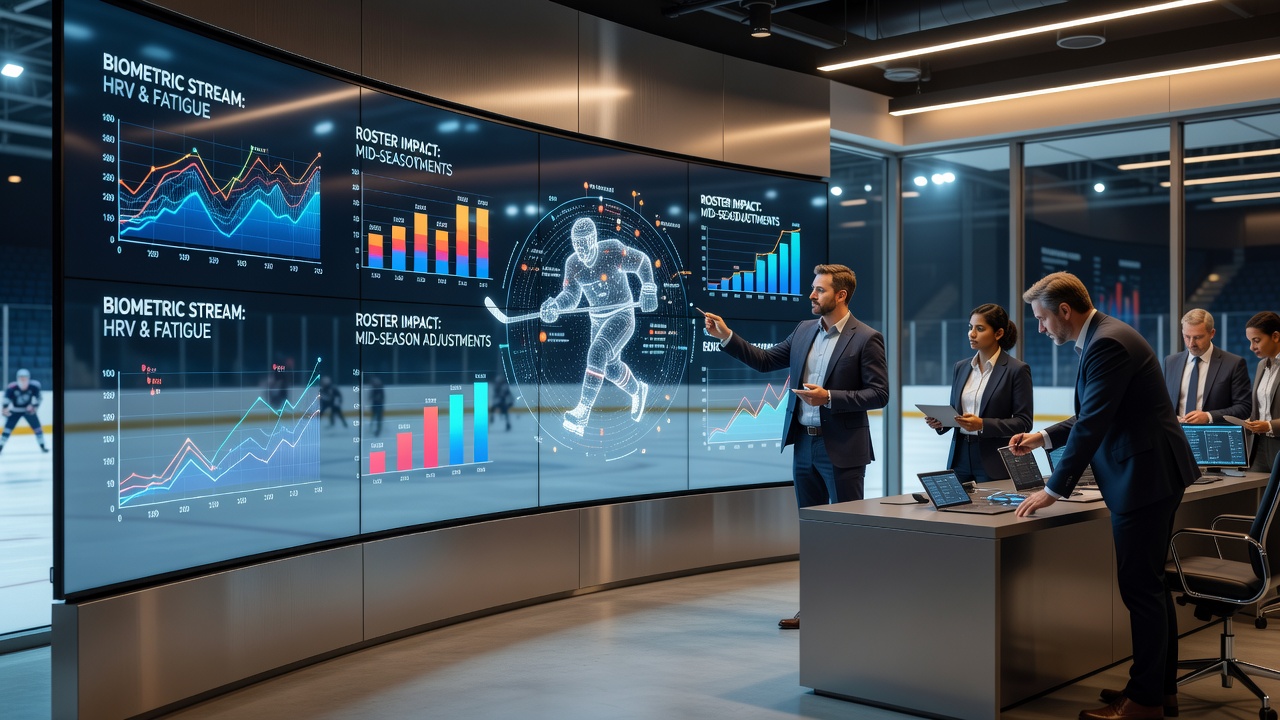
Line combinations shift when data indicates mismatched fatigue profiles between linemates, and special-teams units receive similar scrutiny. Power-play participants whose heart rate variability remains suppressed after penalty-kill shifts may be rotated out for the following game, even if their production numbers appear acceptable on paper. This layered approach prevents over-reliance on any single metric and distributes decision-making across performance analysts, physicians, and head coaches.
Examples From Recent Seasons
One SHL club altered its second-line center rotation after three consecutive weeks of declining skating load metrics, inserting a younger forward whose biometric profile showed full recovery within 24 hours of high-intensity sessions. In the DEL, a team facing a condensed schedule after weather-related postponements used cumulative collision data to rest two veteran defensemen during a mid-week contest, then recalled a prospect whose training camp numbers had aligned closely with established players. Those who've studied these adjustments across multiple campaigns point to consistent patterns where early biometric flags preceded both performance drops and subsequent roster corrections by several days.
Conclusion
Biometric streams continue to supply European hockey organizations with granular indicators that complement conventional scouting and statistical analysis. As sensor accuracy improves and data-sharing protocols standardize, mid-season roster adjustments will increasingly rest on objective recovery and workload profiles rather than anecdotal assessments alone. The 2026-2027 campaign will test how well clubs translate accumulated streams into sustained competitive edges when transfer deadlines approach.