Camera Perspectives and Their Influence on Scoring Reliability in Olympic Gymnastics
Written by Henrik Sullivan · Aug 23, 2026
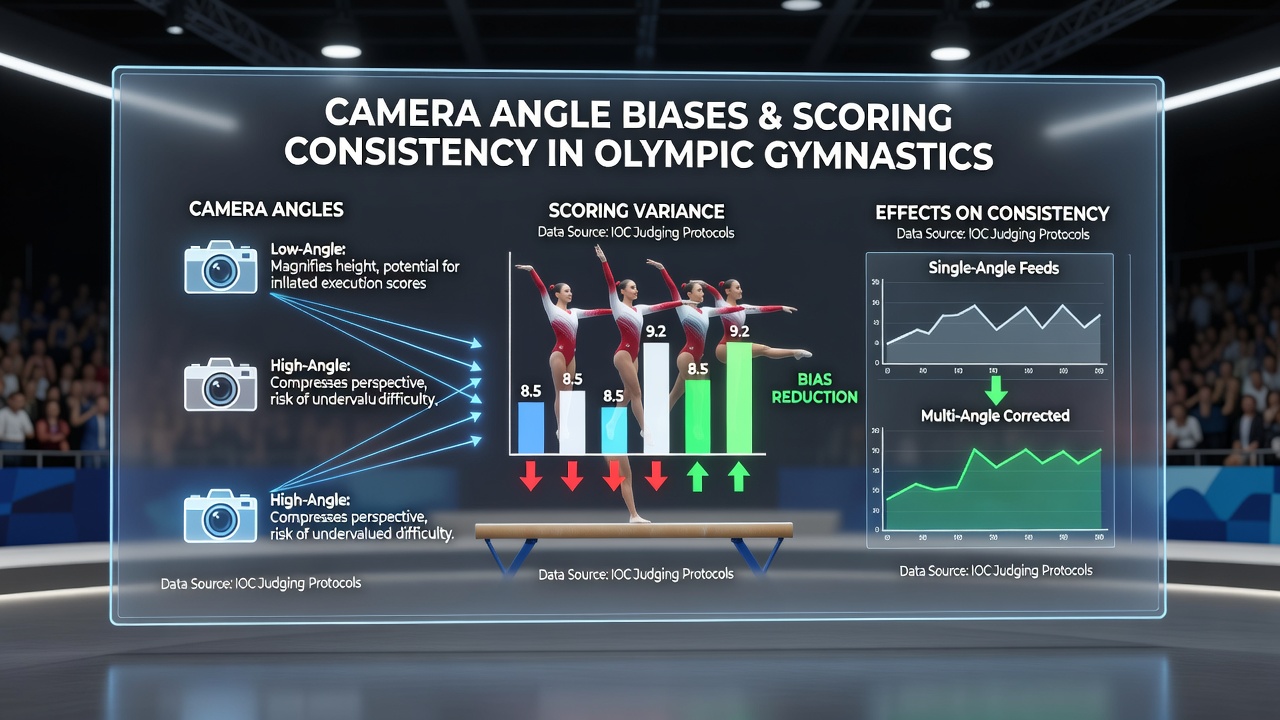
Camera Perspectives and Their Influence on Scoring Reliability in Olympic Gymnastics
Judges in Olympic gymnastics rely on a combination of live observation and video review to evaluate routines, yet camera angles introduce measurable variations in how elements appear during assessment. Data collected across multiple Games cycles shows that slight shifts in perspective alter perceptions of body alignment, rotation speed, and landing stability, which in turn affects the final scores awarded to athletes. The International Gymnastics Federation maintains technical regulations that specify camera placements, but execution during competitions still leaves room for inconsistency when feeds switch between fixed positions and handheld units.
Judging Protocols and Video Integration
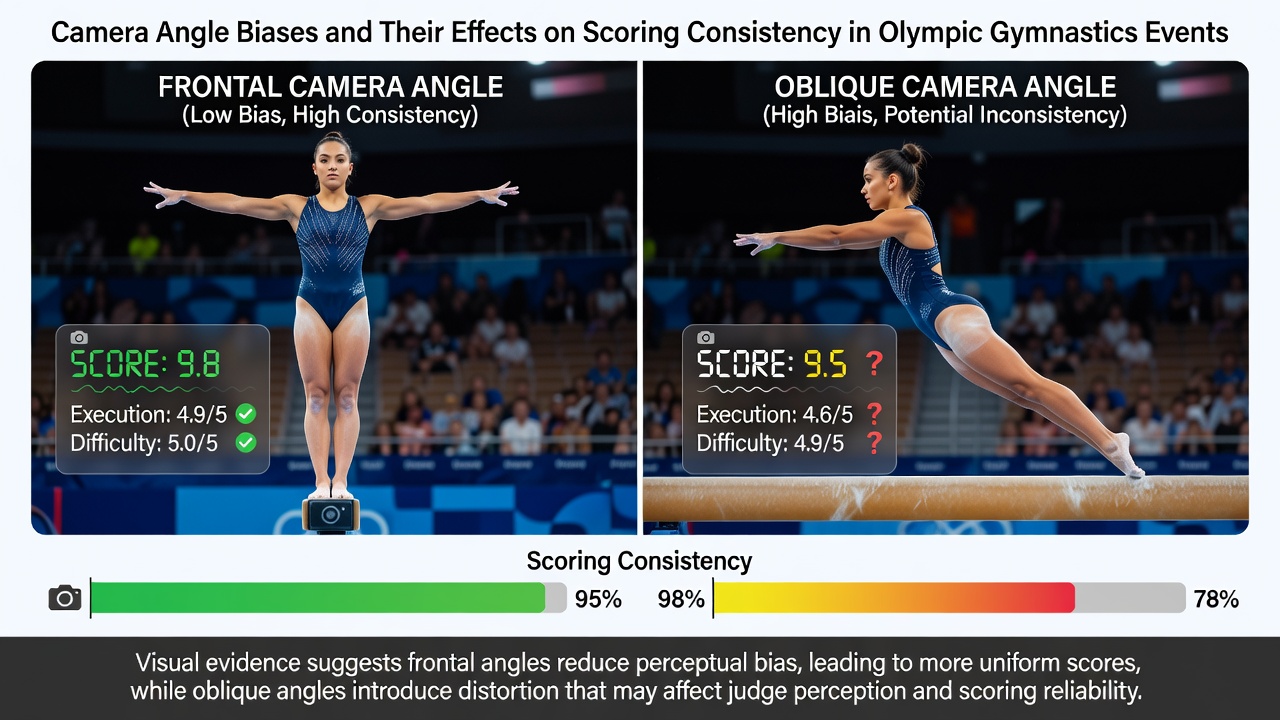
Gymnastics scoring combines difficulty and execution components, with execution judges deducting points for form breaks that cameras sometimes capture more clearly than the human eye from certain positions. Execution panels review slow-motion replays from designated angles when disputes arise, and this process has expanded since the introduction of the open-ended scoring system in 2006. Research from the 2020 Tokyo Games indicated that routines reviewed primarily through side-angle footage received deductions differing by an average of 0.3 points compared with frontal perspectives on the same performances. Officials continue to refine these protocols ahead of the 2028 Los Angeles Games, with additional testing scheduled during preparatory events in August 2026.
Documented Effects of Specific Angles
Side-angle cameras often emphasize hip and shoulder positioning on apparatus such as uneven bars and balance beam, while overhead views highlight foot placement and leg separation during aerial elements. A multi-year analysis conducted by European sports science institutes found that vault landings judged from a 45-degree rear angle produced higher average execution scores than identical landings assessed from a direct side position, because the rear perspective reduced visible knee flexion in some cases. Beam routines showed similar patterns when dismounts were filmed from elevated positions that obscured minor balance checks occurring on the far side of the apparatus.
Camera switches during live broadcasts further complicate matters because judges and viewers see different sequences of footage. When a routine includes rapid transitions between rings or pommel horse elements, the brief delay in feed changes can result in missed or over-emphasized form breaks depending on which camera becomes active first. Studies of the 2016 Rio and 2024 Paris competitions revealed that athletes whose routines were captured more frequently by the primary broadcast camera received execution scores with lower standard deviation across multiple judges than those whose key skills appeared mainly on secondary angles.
Consistency Challenges Across Apparatus
Floor exercise presents unique difficulties because routines span the entire mat and require judges to track movement across a wide area. Cameras positioned at corners versus center court lines create different depth perceptions during tumbling passes, and data indicates that passes moving toward the camera receive slightly higher amplitude scores than identical passes moving away from it. Parallel bars and horizontal bar routines face comparable issues when release moves occur at heights where overhead cameras either compress or exaggerate flight trajectories.
The Fédération Internationale de Gymnastique has responded by mandating minimum numbers of synchronized high-definition feeds for each apparatus, yet variations persist because lighting conditions and arena architecture differ between venues. A collaborative report involving Canadian and Australian research teams documented that vault scores at indoor facilities with darker backgrounds showed greater angle-related discrepancies than those at venues with brighter, uniform backdrops. These findings prompted updates to equipment standards that take effect during the 2026 qualification cycle.
Technological Adjustments and Future Preparations
Recent implementations include synchronized multi-camera systems that allow judges to toggle between preset angles without losing frame alignment. Software overlays now mark ideal body lines on replay footage, reducing reliance on subjective visual estimation. Trials conducted during continental championships in 2025 demonstrated that judges using these tools produced execution scores with reduced variance across repeated viewings of the same routine. Preparations for the August 2026 test events will incorporate expanded sensor data alongside traditional video to cross-verify elements that remain difficult to assess from any single camera position.
Conclusion
Camera angle variations continue to shape how execution deductions are applied in Olympic gymnastics, with measurable effects on score consistency across apparatus and competitions. Ongoing refinements to camera placement standards, combined with new review technologies, aim to narrow these differences as the sport moves toward the 2028 Games. Data gathered through 2026 events will provide further insight into the effectiveness of current adjustments.