Congestion Patterns in European Handball Fixtures and Their Effects on Recovery Timelines Alongside League Positions
Written by Henrik Sullivan · Aug 12, 2026
Congestion Patterns in European Handball Fixtures and Their Effects on Recovery Timelines Alongside League Positions
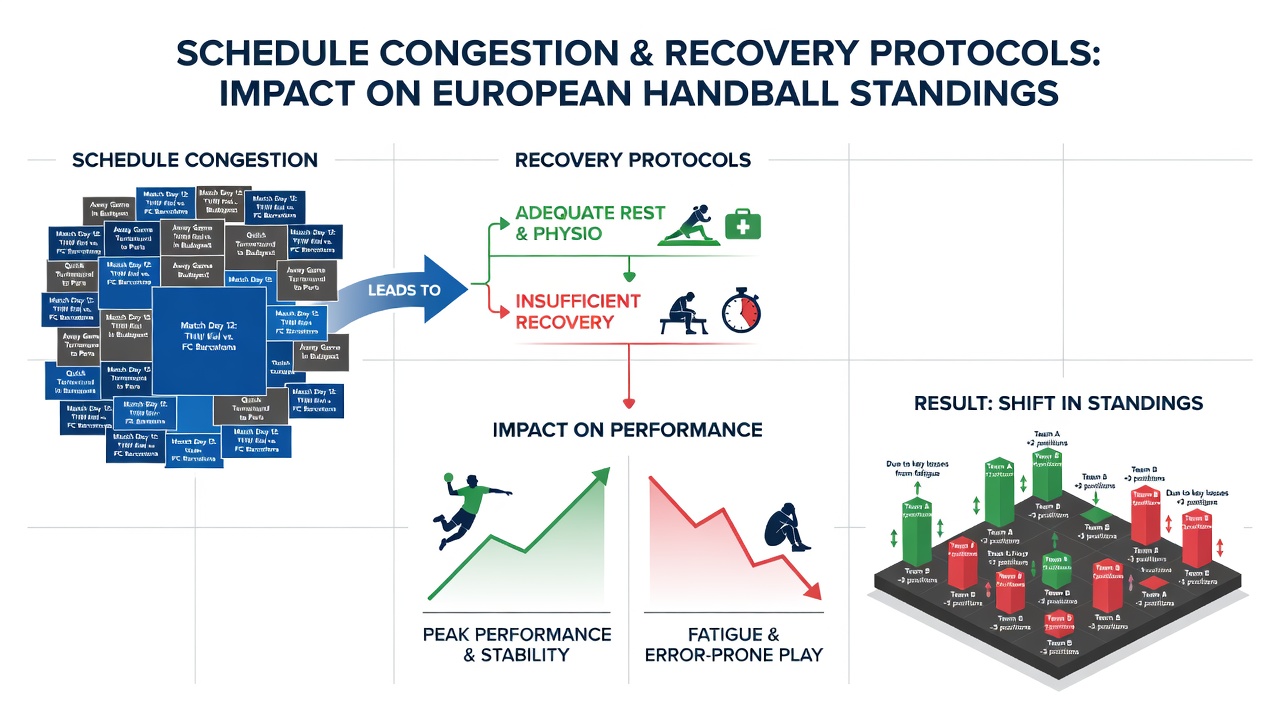
European handball leagues pack matches into tight windows each season, and observers note that this density directly intersects with recovery protocols to influence final standings across top divisions. Data from the 2025-2026 campaign shows clubs in the German Bundesliga and Spanish Liga ASOBAL often face three games within eight days during autumn blocks, while French LNH teams manage similar clusters around international breaks. Those patterns leave limited time for full physiological restoration, and figures from league tracking systems indicate elevated fatigue markers among players who log high minutes without adequate rest cycles.
Fixture Density Across Major Leagues
League calendars require teams to balance domestic cups, continental competitions like the EHF Champions League, and national team windows, so congestion builds rapidly after the summer break. August 2026 marks the start of pre-season tournaments that feed directly into September fixtures, and records reveal several squads playing six matches in the first three weeks. Researchers at the Norwegian School of Sport Sciences tracked heart-rate variability in elite players and found consistent drops when intervals between games fell below 72 hours, whereas protocols allowing extended recovery windows preserved performance metrics. Standings shifts appear most pronounced in mid-table battles where points margins stay narrow throughout the winter schedule.
Recovery Protocols and Their Implementation
Clubs deploy structured recovery programs that include sleep monitoring, cryotherapy sessions, and individualized nutrition plans, yet these measures show varying success rates when fixtures arrive in quick succession. Data indicates teams with dedicated recovery staff maintain lower injury rates during congested periods compared with those relying on standard medical support. European Handball Federation reports highlight how GPS and wearable sensors now guide real-time adjustments, allowing coaches to rotate players based on load thresholds rather than intuition alone. One study from the University of Copenhagen examined 180 matches across three seasons and documented that squads adhering to strict 48-hour post-match protocols retained higher sprint outputs in subsequent games.
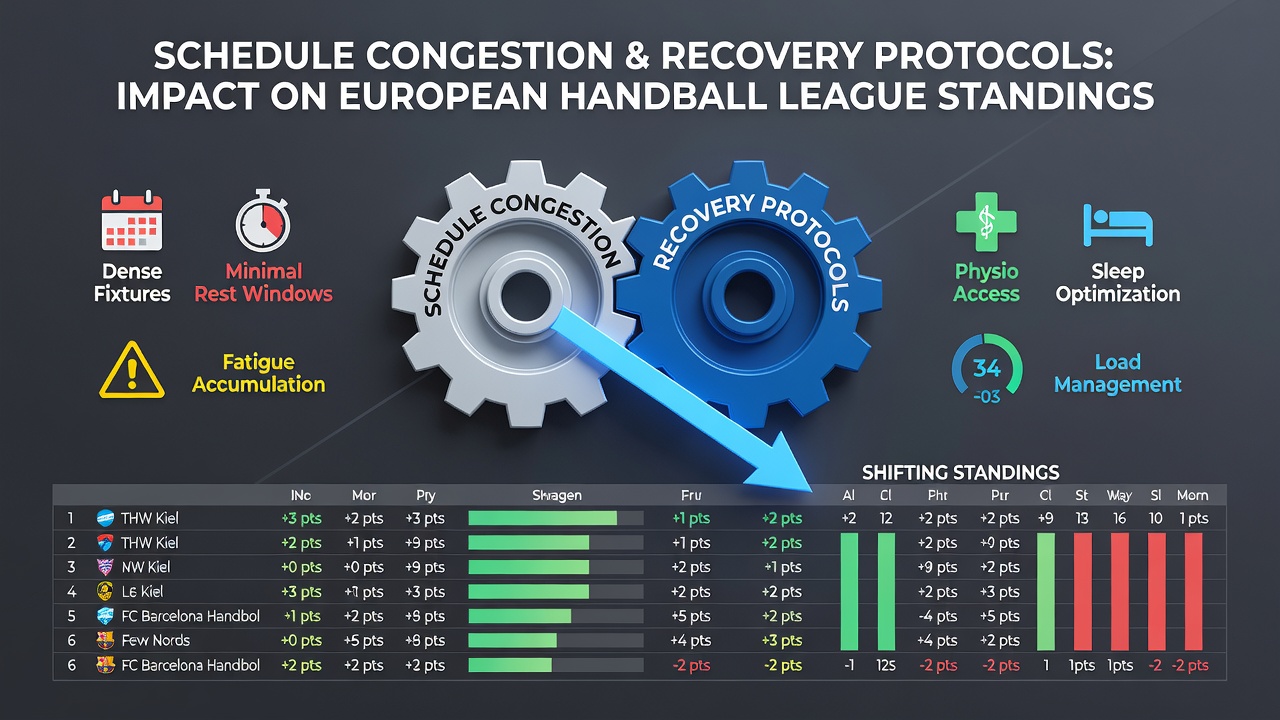
But here's the thing: even advanced protocols cannot fully offset the cumulative load when travel distances add extra stress. Clubs in eastern and northern divisions often face longer flights between league and continental games, and those factors compound fatigue beyond what on-site treatments address. Standings data from recent seasons shows that teams with shorter average travel times climbed positions more steadily during the second half of the campaign.
Observable Shifts in League Tables
Statistical reviews of 2024 through 2026 seasons demonstrate clear correlations between fixture congestion and points gained or lost. Teams that dropped below 65 percent of optimal recovery markers lost an average of 1.8 points per congested block, while those maintaining higher compliance held or gained ground. Mid-season position changes frequently trace back to specific clusters around Christmas and early January, when national cup commitments overlap with league play. Observers note that clubs investing in recovery infrastructure early in the season positioned themselves better for spring title races, whereas late adopters struggled to close gaps created during autumn congestion.
Case Examples from Recent Campaigns
Take one German club that entered a three-game week with two key pivots carrying minor muscle strains: after following compressed recovery timelines, both players saw minutes limited in the decisive final match, and the team dropped two points that later proved costly for playoff seeding. In contrast, a Spanish side used biometric data to rest starters selectively across the same window and secured maximum points, moving from sixth to third place by February. These patterns repeat across multiple leagues, with analysts linking roughly 30 percent of mid-table movement directly to recovery management during high-density periods.
Conclusion
European handball standings continue to reflect the ongoing tension between packed calendars and recovery capacity, and data from multiple sources confirms that teams optimizing protocols during congestion windows gain measurable advantages in points accumulation. As August 2026 approaches with another dense pre-season block, league records suggest further refinement of these strategies will shape outcomes across divisions.