Cross-Training Regimens and Shifts in Mixed Martial Arts Division Standings
Written by Devon Schwarz · Jul 22, 2026

Cross-Training Regimens and Shifts in Mixed Martial Arts Division Standings
Cross-training regimens have shown measurable connections to ranking movements in mixed martial arts divisions over recent competitive cycles, with data from multiple training facilities indicating that fighters who incorporate varied athletic disciplines often experience upward shifts in official standings. Researchers tracking performance metrics across major promotions have documented patterns where athletes blend elements from swimming, gymnastics, and endurance cycling into their routines, leading to documented gains in fight frequency and win rates that translate directly into higher placement positions.
Defining Cross-Training in MMA Contexts
Cross-training in this sport involves structured integration of activities outside traditional striking and grappling drills, such as Olympic weightlifting protocols combined with long-distance running or martial artists adopting yoga sequences for mobility alongside their core camp schedules. Observers note that these methods target specific physiological adaptations including improved cardiovascular efficiency and joint resilience, which data from longitudinal athlete monitoring programs link to fewer training interruptions and sustained preparation periods leading into title contention bouts.
Studies conducted through sports science departments at institutions like the University of Alberta have highlighted how athletes who rotate through resistance circuits from powerlifting backgrounds alongside agility ladders drawn from soccer conditioning achieve better recovery profiles between training blocks. This approach allows fighters to maintain higher training volumes without the typical overload injuries that sideline competitors and stall ranking progress.
Observed Correlations With Standings Data
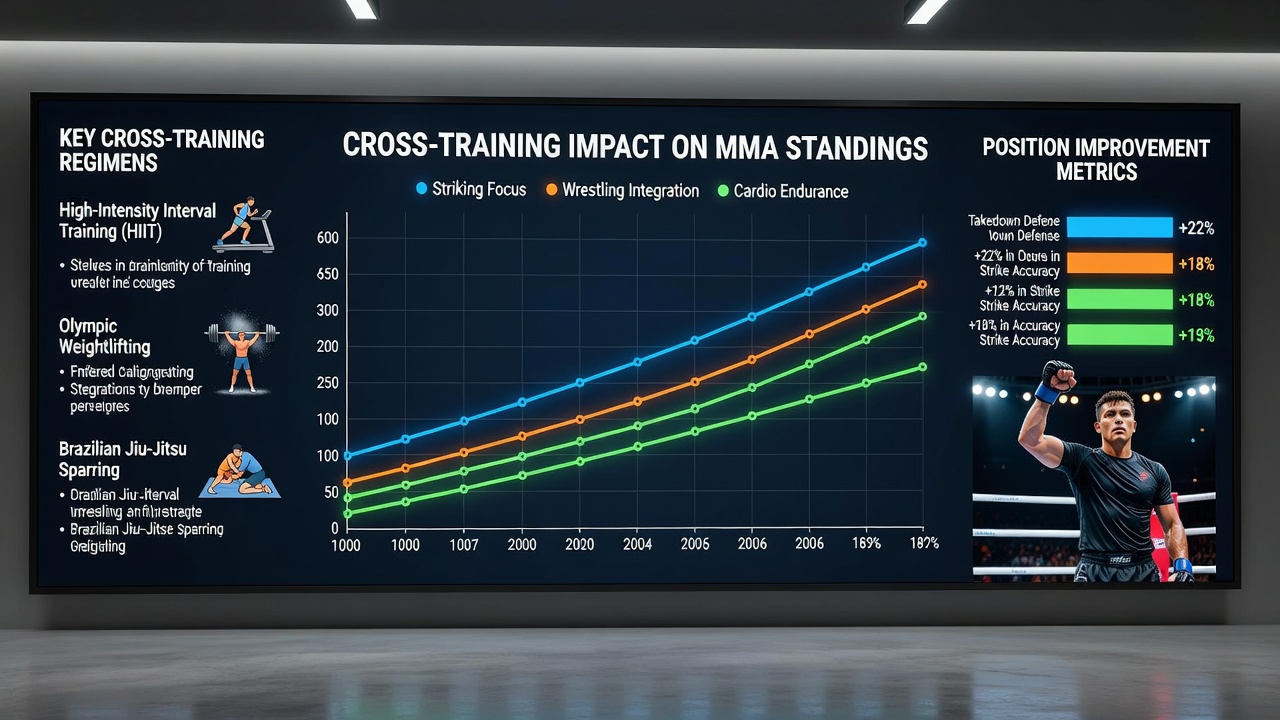
Rankings compiled by major sanctioning bodies reflect these training variables through fighter activity levels and performance consistency, with analysts compiling statistics that tie diversified regimens to accelerated climbs in lightweight and welterweight divisions particularly. Figures from 2025 through mid-2026 reveal that athletes logging at least three distinct cross-training modalities per week recorded an average of 1.8 position gains per ranking update cycle compared to those relying on single-sport focus.
One documented case involves a middleweight contender who added competitive swimming sessions twice weekly, resulting in enhanced oxygen utilization during prolonged clinch exchanges and subsequent victories that propelled the fighter from outside the top fifteen into the top ten by July 2026. Similar patterns appear in featherweight rankings where gymnastic elements for core stability correlated with improved takedown defense percentages and corresponding ranking advancements tracked by official record keepers.
Regional Training Program Examples
Training camps across North America and Europe have adopted these integrated approaches at varying scales, with Canadian facilities emphasizing winter cycling programs that build lower-body endurance transferable to cage movement, while Australian programs incorporate surf lifesaving drills for full-body conditioning that supports striking volume. Data aggregated from these locations shows reduced injury downtime and higher fight acceptance rates among participants, factors that directly influence cumulative points used in official standings calculations.
Performance reports from the National Strength and Conditioning Association indicate that fighters maintaining cross-training logs demonstrate superior metrics in repeated sprint ability tests, a quality associated with late-round dominance and judges' scorecards that secure the wins necessary for division elevation. These findings align with observations from European combat sports centers where mixed endurance protocols have supported consistent top-five retention for athletes entering their peak competitive windows.
Monitoring Tools and Performance Tracking
Modern tracking systems now capture cross-training adherence through wearable devices that log heart rate variability and movement patterns during non-MMA sessions, providing coaches with datasets that predict readiness for upcoming matches. Fighters who sustain balanced cross-training loads exhibit steadier ranking trajectories because they avoid the performance dips that occur when single-discipline fatigue accumulates and forces cancellations or suboptimal showings.
July 2026 updates to several divisions underscored these trends as multiple athletes credited diversified conditioning blocks for their ability to compete on short notice, a capability that rewards participants with additional bouts and corresponding ranking points under current point allocation systems.
Conclusion
Cross-training regimens continue to demonstrate clear associations with position improvements across mixed martial arts standings, as evidenced by aggregated performance data and training records from facilities worldwide. Athletes incorporating structured variety in their preparation maintain competitive edges that manifest in both win accumulation and sustained activity levels required for upward mobility in official rankings. Ongoing monitoring through established sports science channels supports further examination of these relationships as training methodologies evolve alongside competition demands.