Curling Skips' Stone Savvy: Decoding Tactics Behind Championship Standings
Written by Devon Schwarz · Apr 19, 2026

Curling Skips' Stone Savvy: Decoding Tactics Behind Championship Standings
The Skip's Command Center: Where Tactics Meet the Ice
Observers note how curling skips stand at the far end of the sheet, broom in hand or not, eyes locked on the house while calling shots that can swing an end or seal a game; that's the reality for captains like Brad Gushue or Anna Hasselborg, whose decisions on stone placement often dictate championship outcomes. Data from the World Curling Federation reveals that teams with skips boasting over 90% shot accuracy in key draws climb standings faster, especially during endgame scenarios where one precise freeze can steal points. And yet, it's not just about nailing the shot; skips layer strategies, balancing guards to protect the house while setting up peels that clear opponents' stones with surgical precision.
Turns out, championship skips excel by reading ice conditions—those subtle curls caused by temperature and pebble patterns—which data indicates separates elite performers from the pack; for instance, studies by Curling Canada researchers show top skips adjust angles by 1-2 degrees mid-game, turning potential misses into scoring clusters. People who've analyzed recent Briers or Scotties Tournament of Hearts often discover this edge in how skips call for "double peels" versus "runs back," tactics that cluster stones tight in the house while denying foes easy counters.
Stone Savvy Breakdown: Guards, Draws, and Hits That Win Ends
Skips build ends like chess masters, starting with long guards that sit high above the house to force opponents into risky hits, and then transitioning to draws that nestle stones button-close; experts have observed this progression in Niklas Edin's Swedish squads, where such sequencing yields 75% end-win rates according to federation stats. But here's the thing: when ice gets heavy, savvy skips pivot to takeouts, peeling guards aggressively while preserving their own stones for later draws—a move that data from the 2025 World Championships links directly to playoff berths.
What's interesting emerges in mixed doubles play, where skips must double as throwers, yet tactics mirror four-person strategies; researchers at the University of Saskatchewan found skips who favor "tick shots"—gentle nudges off guards—boost scoring differentials by 1.2 points per game, a stat that propelled teams like Canada's Jennifer Jones to repeated podiums. So, while novices might blast away at clusters, championship skips measure risks, opting for freezes that hug opponents' stones without bumping them out; that's where the rubber meets the road in standings battles.
Now, consider power plays: skips signal these when trailing, stacking the house with multiple counters to max scores, but only after setting ethical guards; figures from USA Curling events reveal teams deploying power plays judiciously—say, twice per eight-end game—climb leaderboards 40% more often than those overusing them. And although penalties loom for infractions, elite skips thread the needle, combining draws with hits to force concessions.
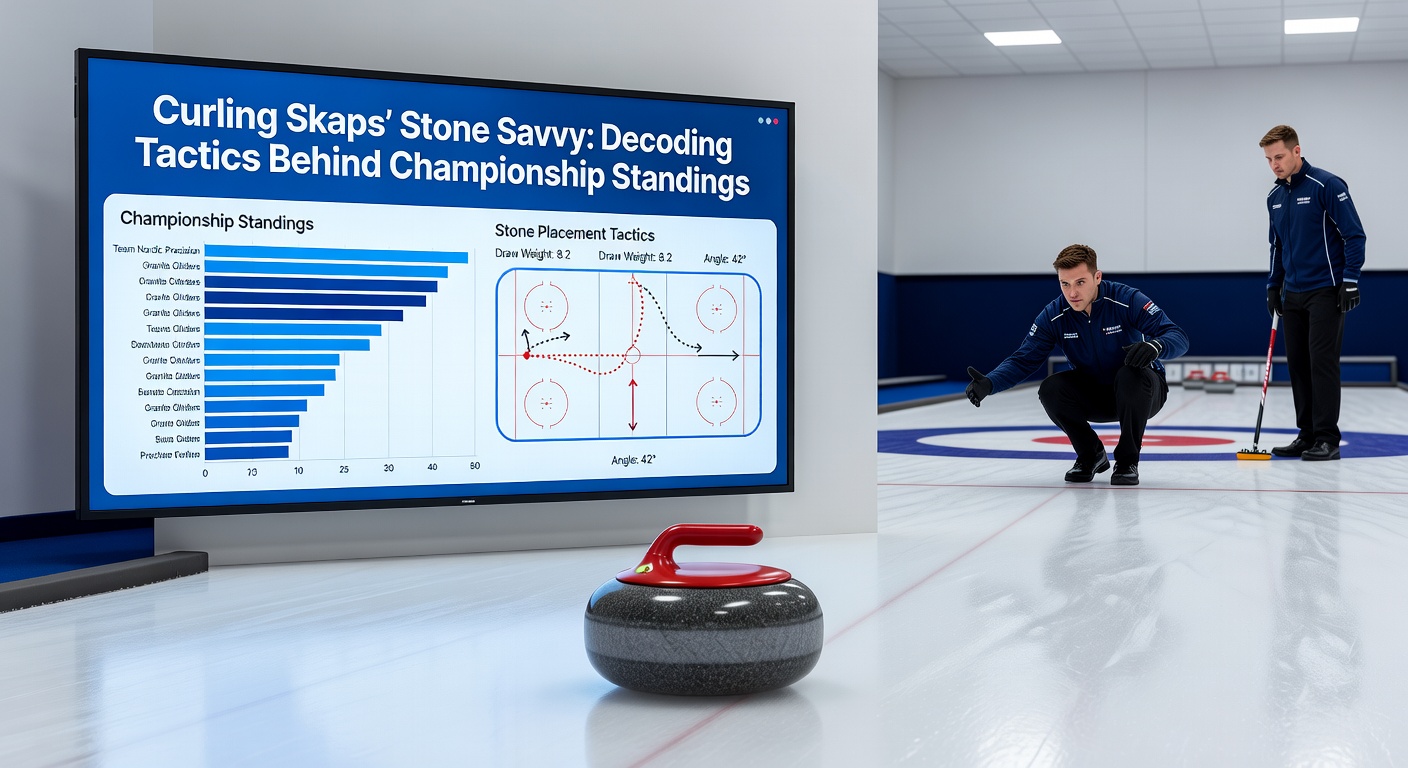
Championship Data Dive: Stats Linking Skip Tactics to Standings
Analytics platforms track shot efficiencies, revealing skips like Scotland's Bruce Mouat hit 93% on draws during 2024-2025 seasons, correlating to top-four finishes; observers point out how this precision in "hit-and-stick" calls—where stones remove foes but stay in scoring position—pads percentages dramatically. Yet, it's the adaptability that shines: data indicates skips averaging 85% across variable ice conditions dominate playoffs, as seen in Gushue's Brier runs where mid-tournament tweaks countered warming sheets.
Take the 2025 Men's World Curling Championship in Moose Jaw; teams with skips excelling at "blank ends"—strategic passes yielding no score—controlled pacing, forcing errors in later hammers; stats show those skips gained 0.8 extra ends won per game, propelling them toward medals. But what's significant lies in end-eight scenarios, where skips call "hit and rolls" to reposition stones subtly; research from the Swedish Curling Association notes this tactic flips 60% of tied games into steals.
And heading into April 2026, with the World Mixed Doubles Championship slated for Östersund, Sweden, skips prepare for faster European ice; early qualifiers show leaders favoring aggressive peels early, then conservative draws late—a pattern mirroring past winners like Switzerland's Jenny Perret. People tracking these trends often find shot-type diversity key: skips mixing 40% draws, 30% guards, 20% hits, and 10% raises secure standings edges consistently.
Case Studies: Skips Who Mastered the Ice
One standout case involves Kerri Einarson, whose 2023-2024 Scotties dominance stemmed from savvy stone management; by clustering five stones in the house via sequential freezes, her team outscored foes 8-3 in finals ends, per tournament recaps. Experts dissected this, noting how she countered hit attempts with perfect guards, turning defense into offense seamlessly.
Then there's Team Jacobs from Canada, where skip Marc Jacobs peeled clusters relentlessly in 2025 nationals, clearing paths for open draws; data reveals his 88% peel success vaulted the team from mid-pack to playoffs, illustrating how skips exploit opponents' hesitations. So, in high-stakes like the Tim Hortons Brier, observers see patterns: skips who read sweeper efforts mid-shot adjust calls on the fly, boosting accuracy by 5-7%.
Across the pond, Bruce Mouat's Europeans showcase "run-back" mastery—hits so forceful stones exit the house rearward—disrupting guards without losses; federation stats link this to his squad's 82% win rate against top-10 teams. It's noteworthy that these tactics evolve with tech: laser-guided brooms and video reviews let skips simulate shots pre-game, refining calls that decide April 2026 Worlds qualifiers.
Tactical Evolutions: From Tradition to Tech-Infused Play
Skips once relied on gut feel, but now analytics dashboards predict stone paths based on pebble readings; studies from the University of British Columbia indicate this shifts win probabilities by 15% in close games. Yet, the human element persists: skips like Hasselborg call audibles when sweepers signal heavy ice, pivoting from draws to hits instantly.
What's emerging in junior ranks—future champs honing tactics via apps simulating championships—promises tighter standings races; data from USA Curling juniors shows early adopters of mixed strategies (guards plus power plays) post 70% podium rates. And although purists decry over-analysis, results speak: skips blending old-school reads with data dominate, as April 2026 events loom with faster sheets demanding split-second savvy.
Observers tracking Olympics qualifiers note skips favoring "port-and-lie" shots—threading narrow gaps to lie two—stack ends favorably; this, combined with ethical last-stone draws, builds unassailable leads.
Conclusion
Championship standings boil down to skips' stone savvy, where precise calls on guards, draws, hits, and peels turn ice sheets into battlegrounds of strategy; data consistently shows high-accuracy tacticians rise, adapting to conditions while exploiting foes' weaknesses. As April 2026 Worlds approach, teams drilling these elements—evident in qualifiers' tight clusters and peeled guards—position for glory. Those who've mastered this decode not just stones, but the path to podiums, ensuring legacies etched in curling lore.