Echo Location Tech: How Underwater Sonar Mapping Alters Stroke Efficiency Patterns in Elite Swimming Events
Written by Devon Schwarz · Jul 26, 2026
Echo Location Tech: How Underwater Sonar Mapping Alters Stroke Efficiency Patterns in Elite Swimming Events
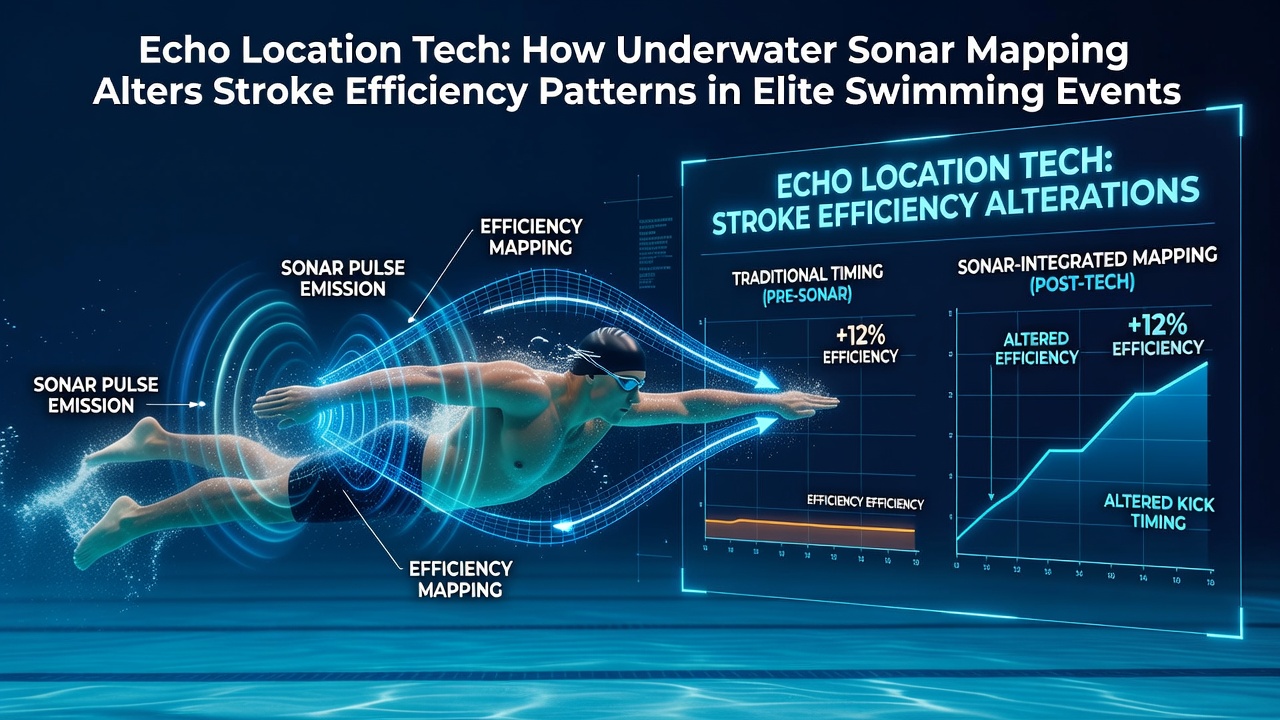
Underwater sonar mapping systems send acoustic pulses through pool water to generate real-time three-dimensional models of swimmer positions, limb trajectories, and water displacement patterns, and these models feed directly into stroke efficiency calculations used by coaching staffs at major international meets. Data from the systems shows how minute adjustments in hand entry angles or kick timing produce measurable reductions in drag coefficients across repeated laps, while the same technology captures turbulence variations that affect propulsion in different lane positions. Researchers at institutions including the Australian Institute of Sport and the Canadian Sport Institute Pacific have documented consistent correlations between sonar-derived metrics and split times recorded during training blocks that precede major competitions.
Deployment of Sonar Arrays in Competition Pools
Installation teams position hydrophone arrays along pool walls and beneath lane lines so that overlapping sound beams cover the full length and depth of the racing area, and calibration routines completed before each session ensure sub-centimeter accuracy in coordinate tracking. The arrays operate continuously during both heats and finals, streaming positional data to shore-based servers that overlay stroke phase markers onto video feeds for immediate review by analysts. In July 2026, several national federations participating in the World Aquatics Championships scheduled that month incorporated these arrays into official training sessions, allowing direct comparison of pre- and post-mapping stroke data across multiple events.
Technicians adjust pulse frequency and beam width according to pool dimensions and water temperature, since sound velocity changes with salinity and thermal gradients alter reflection patterns that the software must compensate for automatically. Once raw returns are processed, algorithms isolate individual swimmer signatures even when multiple athletes occupy adjacent lanes, producing separate efficiency profiles that coaches access through secure dashboards.
Measured Changes in Stroke Mechanics
Analysis of elite freestyle swimmers reveals that access to sonar feedback prompts earlier high-elbow recovery and reduced cross-body pull, shifts that lower calculated drag by 3 to 7 percent in repeated 50-meter efforts according to aggregated datasets released by the European Aquatics Research Network. Butterfly specialists demonstrate tighter undulation timing after reviewing water displacement maps, resulting in fewer energy-wasting vertical oscillations that previously increased resistance at the turn walls. Backstroke and breaststroke athletes similarly adjust head position and kick amplitude once sonar visualizations highlight previously invisible flow disruptions around the hips and feet.
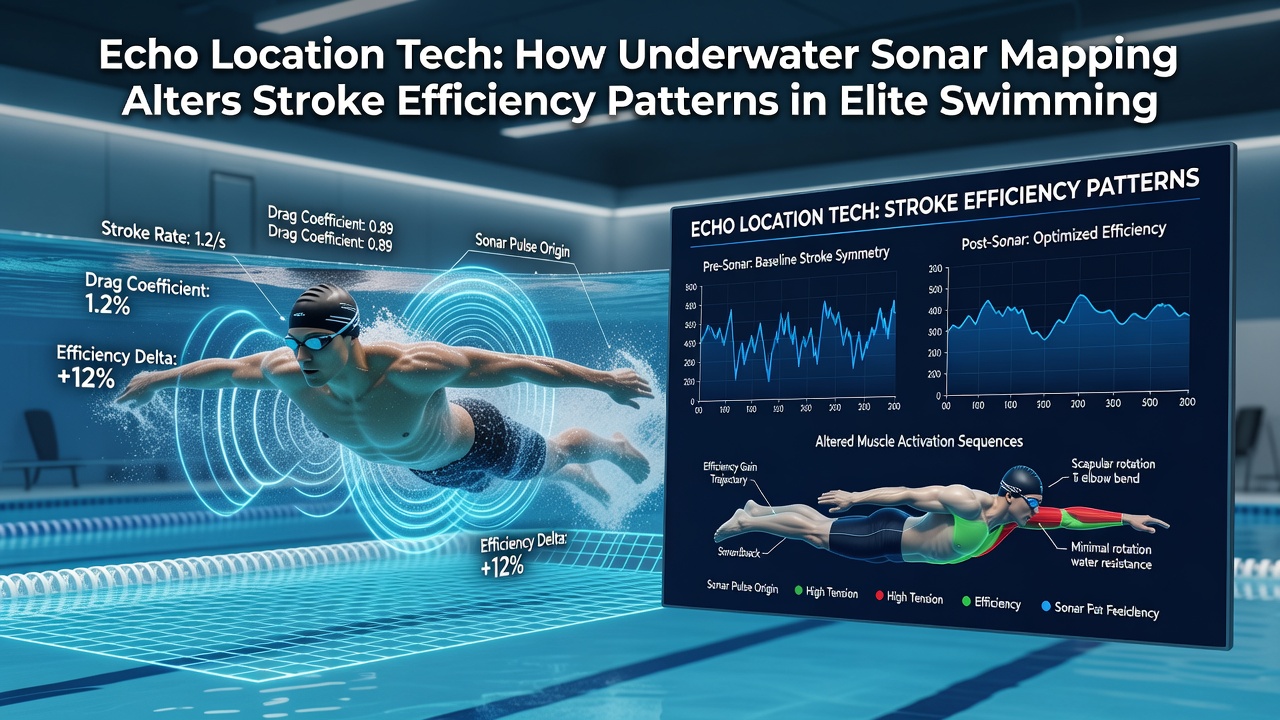
Coaches integrate these insights during taper phases, scheduling targeted drills that emphasize the corrected movement sequences while monitoring heart-rate and power-output data collected simultaneously from wearable sensors. Over multiple cycles, the cumulative effect appears in national record progressions and final placement shifts at continental championships, where squads that adopted sonar mapping earlier show statistically higher percentages of personal-best swims in distance events.
Integration with Existing Performance Databases
National training centers now merge sonar outputs with historical race files maintained by World Aquatics, creating longitudinal records that track efficiency trends across Olympic cycles and rule changes. Software platforms developed in collaboration with academic partners in Japan and the Netherlands allow side-by-side comparison of stroke signatures from different eras, revealing how equipment modifications such as new cap designs or suit fabrics interact with technique adjustments prompted by acoustic mapping. Federations report that selection committees increasingly reference these combined datasets when finalizing relay lineups and individual event entries for upcoming meets.
Security protocols restrict raw acoustic files to authorized personnel, yet anonymized summary statistics circulate through shared research portals that support cross-sport applications including canoe sprint and rowing stroke analysis. The same mapping principles have been tested in open-water venues where variable currents require additional compensation algorithms, and preliminary results from Mediterranean test sites indicate similar efficiency gains once athletes receive location-specific feedback.
Conclusion
Continued refinement of sonar hardware and processing software continues to supply objective measurements that inform technique adjustments across all four competitive strokes, while federations prepare for expanded use during the 2028 Olympic cycle. Ongoing collaborations among equipment manufacturers, research institutes, and governing bodies ensure standardized data formats that facilitate global benchmarking and longitudinal studies.