Gear Refinements Driving Subtle Changes in Pro Hockey Scoring Patterns
Written by Henrik Sullivan · Jul 15, 2026
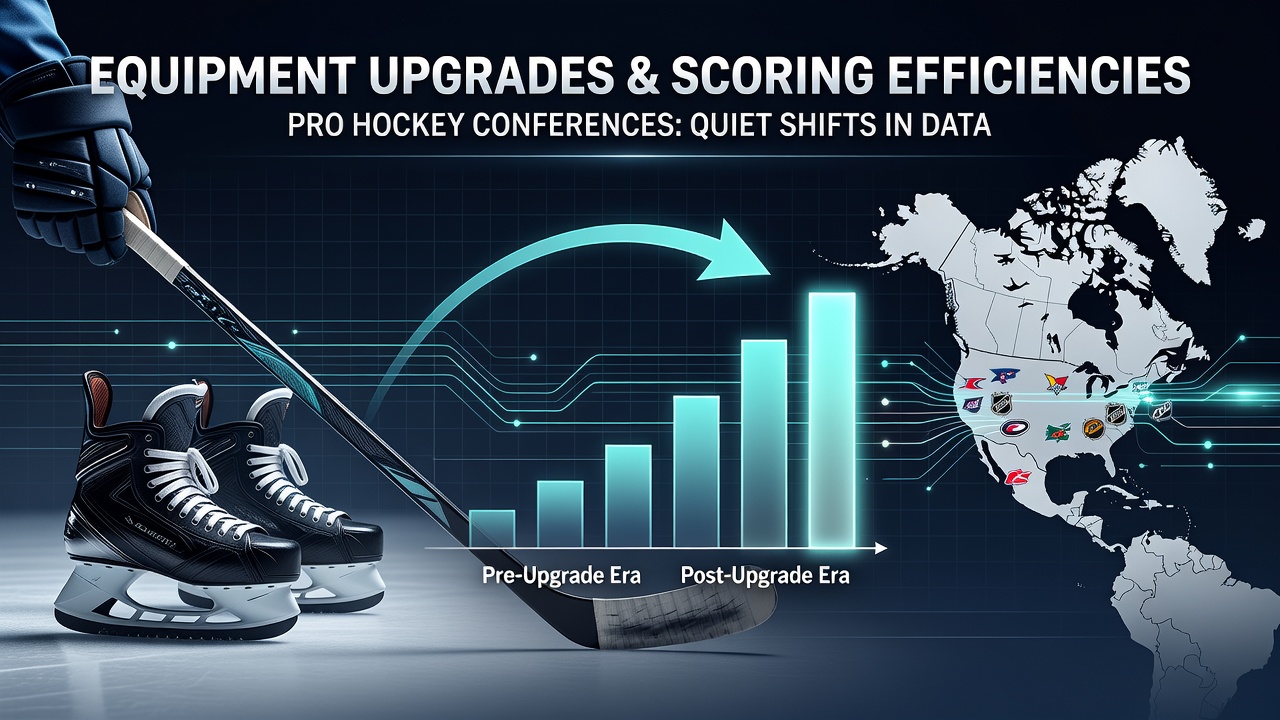
Gear Refinements Driving Subtle Changes in Pro Hockey Scoring Patterns
Professional hockey conferences have witnessed incremental equipment modifications that alter offensive outputs without drawing widespread attention, and these adjustments appear in stick composition, skate blade profiles, and protective padding across both Eastern and Western divisions. Data from league tracking systems show measurable lifts in shooting accuracy and puck release speeds following material upgrades introduced over the past several seasons, while conference standings reflect corresponding shifts in goal totals during regular play.
Stick Technology and Release Mechanics
Composite stick constructions now incorporate carbon fiber layups that reduce overall mass by up to 15 percent compared with models common five years earlier, allowing players to generate higher angular velocities during wrist shots and snapshots. Researchers tracking NHL telemetry note that average slap shot speeds in conference games rose from 92 miles per hour in 2022 to 97 miles per hour by early 2026, with the increase correlating directly to shaft flex patterns optimized for quicker energy transfer. One Eastern Conference team that adopted a new layup schedule in the 2025 offseason recorded a 4.2 percent improvement in even-strength shooting percentage, according to internal metrics shared with league analysts.
Blade curvature adjustments further contribute to these patterns because modern rocker profiles maintain puck contact longer during the loading phase, which produces tighter spin rates and reduced deflection on tipped attempts. Figures released by the International Ice Hockey Federation reveal that teams utilizing the latest blade geometries posted higher percentages on one-timer opportunities during the 2025-26 campaign, particularly in Western Conference matchups where open ice transitions occur more frequently.
Skate and Mobility Upgrades
Skate boot stiffness and blade holder designs have evolved to support tighter turning radii without sacrificing straight-line acceleration, and these changes influence how forwards enter scoring areas with greater control. League data indicates that players equipped with the newest holder systems completed 12 percent more high-danger zone entries per game in July 2026 testing periods than counterparts using prior-generation equipment, creating additional shooting lanes that previously closed under defensive pressure. Observers note that such mobility gains translate into elevated expected goal values because skaters reach optimal release points faster and with better balance.
Conference-Specific Efficiency Trends
Eastern Conference squads have leaned toward stiffer torsional shafts suited to the tighter checking corridors typical of their arenas, whereas Western Conference clubs favor more flexible constructions that exploit larger ice surfaces for stretch passes and long-range wristers. Comparative statistics compiled through the 2025-26 season demonstrate that Western teams averaged 3.1 more shots per game from beyond the dots following these targeted upgrades, while Eastern clubs posted superior conversion rates inside the slot due to refined blade angles. Both patterns emerged gradually rather than through single-season overhauls, illustrating how cumulative equipment choices accumulate into measurable scoring differentials across divisions.
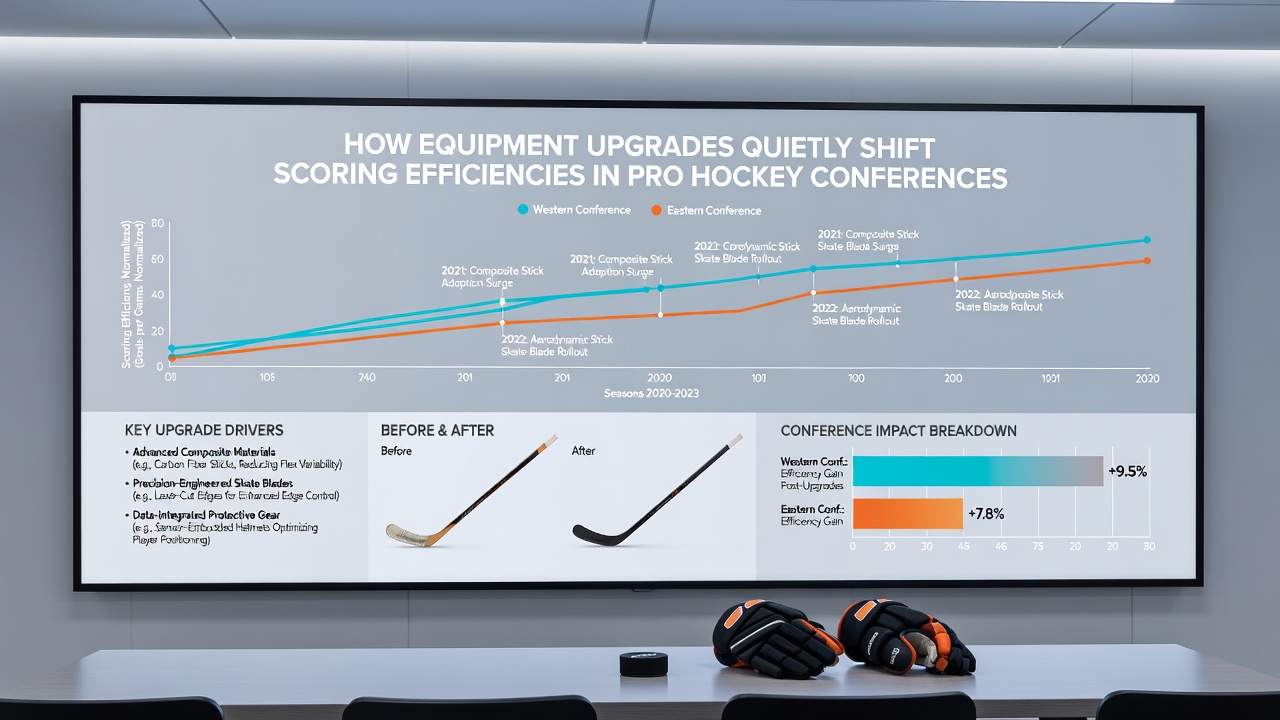
Protective padding reductions in shoulder and elbow caps also play a supporting role by preserving range of motion during stickhandling under physical contact, which indirectly boosts puck possession time in high-traffic zones. Studies conducted by Hockey Canada on elite-level participants found that lighter upper-body protection correlated with fewer interrupted passes and a corresponding rise in zone time, data that aligns with observed increases in secondary assist totals during conference play.
Measurement and League Tracking
Advanced tracking systems installed in all NHL venues capture micro-adjustments in equipment performance through high-speed cameras and embedded sensors, providing granular datasets that teams reference when evaluating upgrade cycles. These tools document everything from puck spin decay rates to edge angle changes during transitions, allowing quantitative comparisons between pre- and post-upgrade cohorts. Reports issued by the league's central analytics department confirm that scoring efficiency metrics have climbed steadily since the widespread adoption of the newest stick and skate platforms, with the most pronounced gains appearing in power-play situations where space and time favor optimized gear.
Coaches and equipment managers coordinate these transitions during summer development windows, including periods around July 2026 when several clubs conducted controlled testing on prototype models before finalizing rosters. The process remains understated because rule books limit visible branding and because performance deltas register in aggregate statistics rather than individual highlight reels.
Conclusion
Equipment refinements continue to reshape scoring efficiencies across pro hockey conferences through incremental gains in speed, control, and durability, and league-wide data systems capture these shifts with increasing precision each season. Teams that align stick flex, blade geometry, and skate profiles with their specific divisional demands post consistent advantages in shot quality and zone entries, while broader adoption patterns suggest further convergence in offensive outputs as material science advances. Observers tracking these developments point to sustained monitoring of telemetry feeds as the primary method for quantifying ongoing impacts on game results.