How Sensor Fusion Refines Position Tracking Across International Endurance and Racquet Sports
Written by Devon Schwarz · Jul 12, 2026

How Sensor Fusion Refines Position Tracking Across International Endurance and Racquet Sports
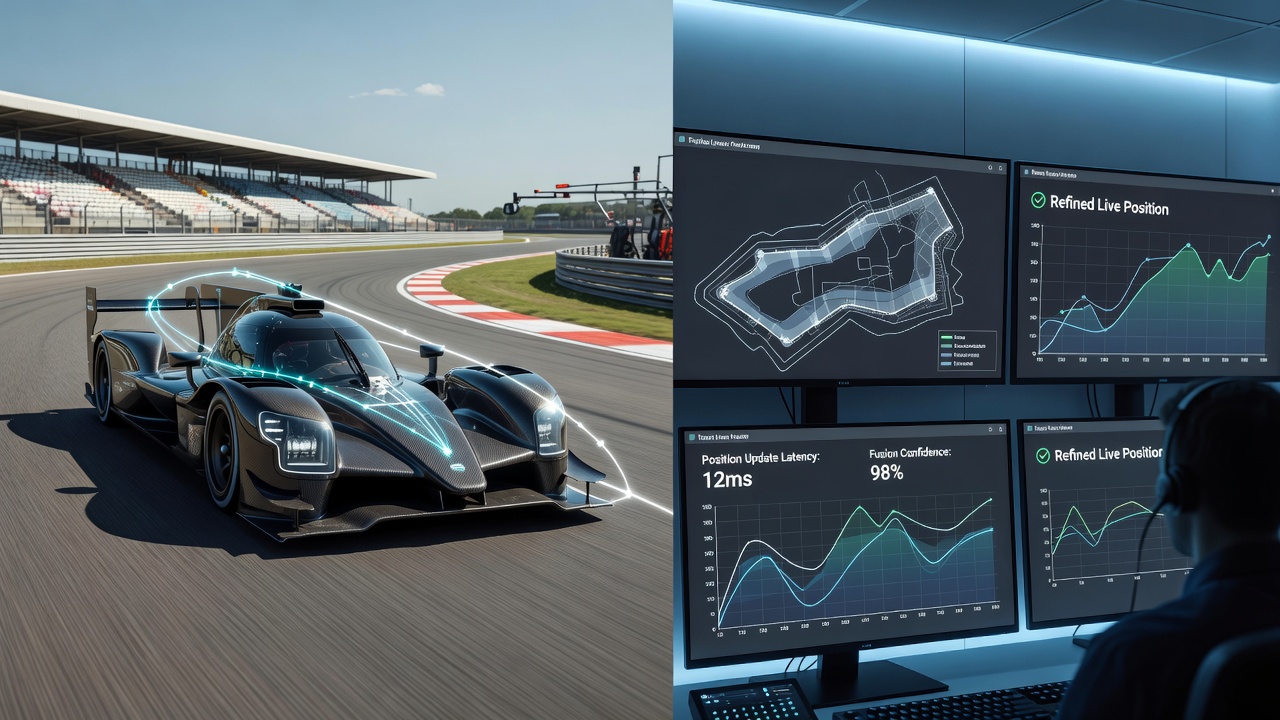
Endurance circuits and racquet competitions worldwide rely increasingly on precise live position data, and sensor fusion techniques combine inputs from multiple devices to improve accuracy in dynamic environments. These methods integrate signals from GPS units, inertial measurement units, and sometimes optical systems, reducing errors that single sensors often produce during rapid movements or signal obstructions. Researchers at various institutions have documented how fusion algorithms process these streams in milliseconds, delivering updates that coaches and officials use for real-time decisions.
Core Techniques in Sensor Fusion
Engineers apply Kalman filters and particle filters as foundational algorithms when merging data streams, because these approaches estimate positions while accounting for noise and uncertainty. A Kalman filter predicts the next state based on previous measurements and then corrects that prediction with new sensor readings, which works particularly well in endurance events where athletes maintain steady paces over long distances. Particle filters handle nonlinear movements more effectively, making them suitable for the quick directional changes common in racquet sports such as tennis or squash. Studies from European research centers show that hybrid implementations of these filters cut positioning errors by up to 40 percent compared with standalone GPS in urban marathon routes.
Applications in Endurance Circuits
Marathons, cycling tours, and triathlons present unique challenges because athletes traverse varied terrain that can block satellite signals or introduce multipath interference. Fusion systems incorporate barometric pressure sensors alongside accelerometers to maintain continuity when GPS drops out, allowing organizers to track pack positions accurately during mountain stages or tunnel sections. In July 2026, several major European gran fondos adopted enhanced fusion platforms that delivered live gap measurements between leaders and chasers, supporting broadcast graphics and safety monitoring. Data from these events indicated that fused outputs maintained sub-meter accuracy over 80 percent of each course, whereas single-sensor methods fell below that threshold in wooded or built-up areas.
Event timing companies have integrated these techniques into wearable devices that athletes wear on wrists or bikes, transmitting fused coordinates to central servers every second. Observers note that this frequency supports both spectator apps and anti-doping position verification, since sudden deviations from expected routes trigger alerts without false positives from momentary signal loss.
Implementation in Racquet Competitions
Racquet sports occur indoors or in stadiums where GPS signals weaken dramatically, so fusion shifts emphasis toward inertial and optical components. High-speed cameras combined with IMU data from player-worn sensors create continuous trajectories for both athletes and equipment. Australian sports technology groups have tested systems that fuse racket-mounted accelerometers with court-embedded pressure sensors, producing ball bounce locations accurate to within centimeters during professional tournaments. These refined positions feed into Hawk-Eye style reviews and also help analysts evaluate player movement efficiency across multiple sets.
International federations report that fusion-derived metrics now influence substitution patterns in team-based racquet formats such as doubles tennis or badminton relays. When algorithms detect fatigue through changes in acceleration patterns fused with position data, support staff receive notifications that allow timely interventions while matches remain in progress.
Technical Challenges and Ongoing Developments
Calibration drift remains a persistent issue because sensors experience temperature fluctuations and mechanical stress during extended competitions. Teams address this through periodic recalibration routines that use known reference points on courses or courts, yet maintaining consistency across thousands of competitors requires scalable cloud processing. Research published by North American universities demonstrates that edge computing nodes placed along event routes can perform initial fusion locally, cutting latency before data reaches central analysis platforms.
Power consumption presents another constraint for battery-powered wearables, prompting developers to optimize fusion algorithms so they run efficiently on low-energy chips without sacrificing update rates. Partnerships between hardware manufacturers and sports governing bodies continue to test new sensor combinations, including ultra-wideband radio for short-range positioning that complements inertial data in crowded start areas or indoor venues.
Conclusion
Sensor fusion continues to evolve as endurance circuits and racquet competitions adopt more sophisticated tracking worldwide. By combining diverse data sources through established filtering methods, these techniques deliver the reliable live position updates that modern events demand. Ongoing refinements in algorithm efficiency and hardware integration suggest further gains in accuracy will appear at upcoming international gatherings, supporting both competitive integrity and spectator engagement without reliance on any single technology.