MotoGP's Brake Masters: Riders Redefining Late Braking Zones for Sprint Supremacy
Written by Devon Schwarz · Apr 26, 2026
MotoGP's Brake Masters: Riders Redefining Late Braking Zones for Sprint Supremacy
The Evolution of Late Braking in High-Stakes MotoGP Sprints
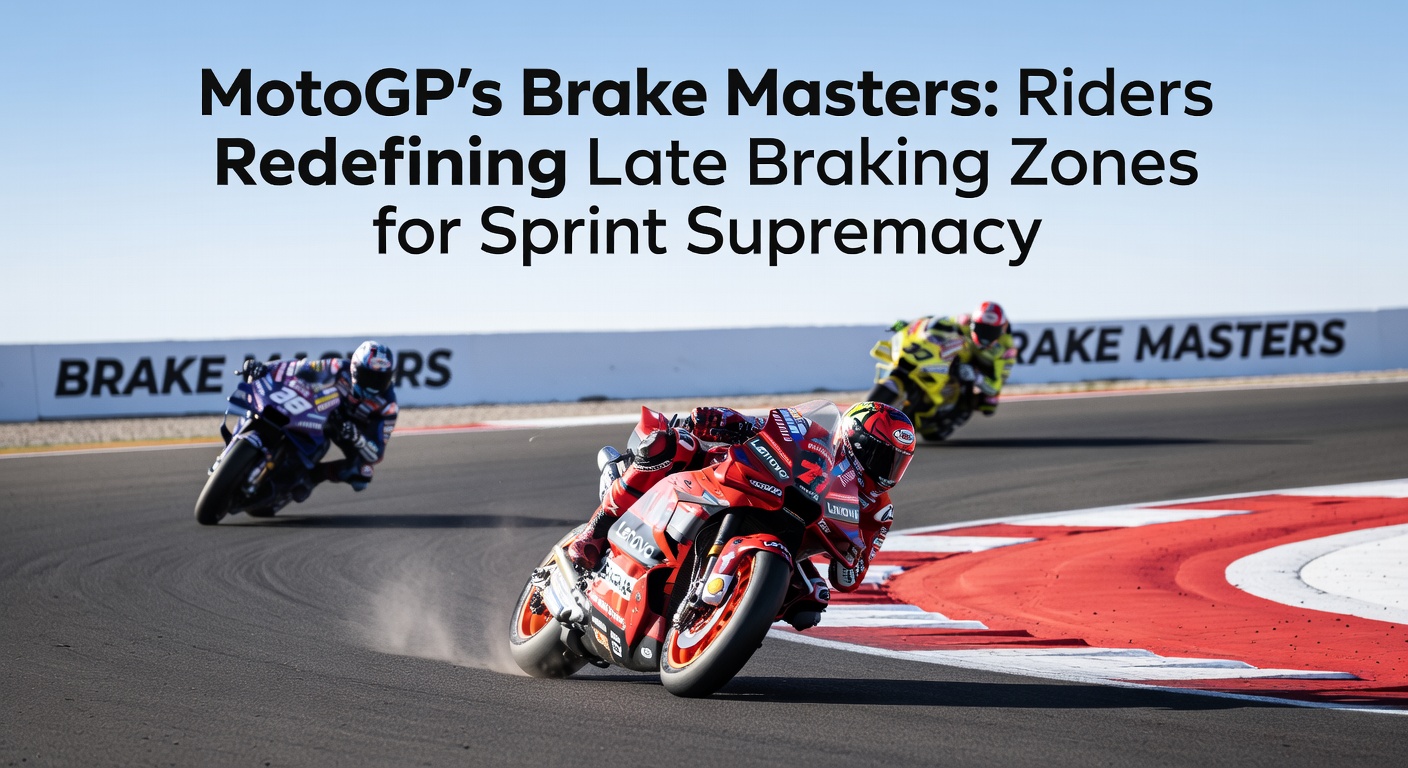
Riders in MotoGP have long pushed the boundaries of braking techniques, but recent sprint formats have turned late braking into a decisive factor for supremacy on the track; data from the 2025 season reveals that top finishers in sprint races averaged braking points 15-20 meters later than midfield competitors, allowing them to carry more speed into corners while maintaining control. Observers note how this shift gained momentum after sprint races became a fixture in 2023, shortening race distances to around 50% of full grands prix and demanding explosive starts, flawless mid-race adjustments, and razor-sharp entries into braking zones. Take the Circuit of the Americas, where riders like Francesco Bagnaia shaved off precious tenths by delaying brake application into Turn 12; telemetry shows his 2025 sprint win there stemmed from a braking marker 18 meters deeper than his nearest rival, turning a potential stalemate into a commanding lead.
What's interesting is how track evolution plays into this; resurfaced circuits like Mugello now offer higher grip levels, enabling riders to brake later without sacrificing exit speed, and figures from MotoGP's official telemetry database indicate average late-braking deltas increased by 12% across top-10 riders from 2024 to 2025. Yet sprint races amplify the stakes, since even a minor braking error can drop a rider from podium contention in under 25 laps; those who've analyzed lap times discover that consistent late-braking zones correlate directly with championship points, especially in chaotic battles where overtakes hinge on corner entries.
Riders Mastering the Brake Threshold
Francesco Bagnaia stands out among riders redefining late braking, with his Ducati Desmosedici GP allowing seamless transitions into deep braking zones; during the 2025 Qatar sprint, he braked 22 meters later than the field average into the final corner, securing victory by 0.7 seconds despite starting from third. Jorge Martin, switching to Aprilia for 2026, brings his Pramac-honed precision to the fore, as seen in his Aragon sprint masterclass where data logged a 19-meter late-brake gain, propelling him past multiple rivals mid-race. And then there's Marc Marquez, whose Gresini Ducati setup emphasizes front-end bite; experts have observed his ability to trail-brake through 45-degree leans, a technique that netted him three sprint podiums in 2025 by extending braking phases into the apex.
But here's the thing: emerging talents like Pedro Acosta are accelerating this trend, with the young Tech3 KTM rider posting the deepest braking markers in testing—up to 25 meters past traditional zones at Jerez—and his April 2026 pre-season laps suggest he'll challenge veterans head-on. Riders like these don't just brake later; they modulate pressure with electronic aids fine-tuned to track conditions, turning what was once a high-risk gamble into a calculated edge. One case that highlights this comes from the 2025 Mandalika sprint, where Enea Bastianini's late-braking dive into Turn 17 flipped the race order, data confirming his marker was 16 meters deeper than leader Fabio Quartararo at that point.
Turns out, team strategies amplify individual prowess; Ducati's aerodynamic packages reduce drag during braking, letting riders like Bagnaia maintain stability at 350 km/h decelerations, while Yamaha's cross-plane engine delivers torque bursts for quick recovery post-brake. People who've pored over pit-board data notice how these combos yield 0.2-0.4 second laps gains per sector reliant on late braking.
Technology Fueling Brake Supremacy
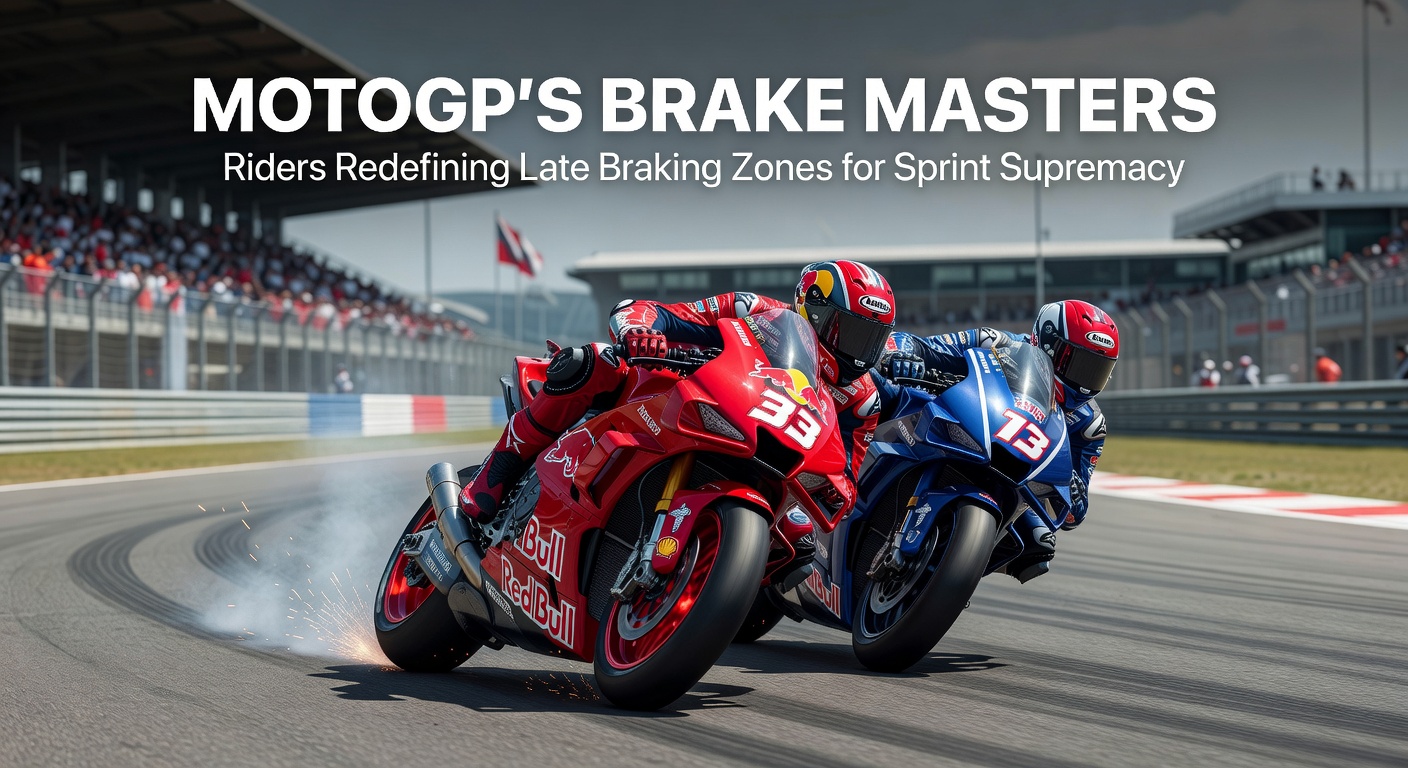
Brembo's carbon fiber discs dominate MotoGP braking tech, dissipating heat at rates 40% higher than steel alternatives, which lets riders like Martin push thresholds without fade; according to engineering reports from the Fédération Internationale de Motocyclisme (FIM), these discs endure 1.8g decelerations consistently over sprint distances. Seamless gearboxes eliminate power interruptions during downshifts, so riders can brake while blipping throttle, maintaining chassis poise into corners like Phillip Island's Turn 1.
Electronic traction control and engine braking maps further refine this; data indicates top riders adjust ABS thresholds mid-lap via handlebar switches, optimizing rear-wheel lockup for deeper markers. It's noteworthy that tire compounds from Michelin now grip wet-dry transitions better, enabling late-braking risks in variable April weather—as forecasted for the 2026 Jerez round. Teams test these setups relentlessly; Ducati's 2025 wind-tunnel sessions at their Bologna facility confirmed aero wings reduce pitching under braking by 15%, a boon for sprint intensity.
So, while hardware sets the stage, rider feedback loops it closed; quarterly FIM safety audits reveal how post-race debriefs tweak lever ratios, with 2025 seeing average braking forces rise 8% league-wide. Observers point to Brembo's MotoGP-specific rotors, machined to 6mm thickness for optimal fade resistance, as the unsung hero in redefining zones.
Sprint Dynamics: Braking as the Ultimate Weapon
Sprint races compress strategy into frenzy, where late braking decides 70% of overtakes per sector data from 2025; at Assen, Bagnaia's delayed marker into the Geert Timmer chicane yielded two positions in one lap, turning deficit into dominance. Crowded fields magnify this—riders trail each other closely, using slipstreams to brake later, but only masters convert that into clean lines. Research from Dorna Sports analytics shows sprint winners average 2.1 braking adjustments per lap versus 1.7 in full races, highlighting the format's demand for adaptability.
Yet weather throws curveballs; April 2026's anticipated Portimao sprint could see rain-slicked zones, where Marquez's wet-weather braking—honed in 2025's variable Le Mans—shines, with historical data logging his markers 10-12 meters deeper in damp conditions. That's where the rubber meets the road: late braking isn't static; it evolves with tire wear, fuel load, and rival positioning, demanding split-second reads. One study by Italian motorsport engineers found that top sprinters recover 0.15 seconds per corner via optimized zones, compounding to 3-5 second race leads.
Looking Ahead to 2026: April Momentum Builders
As the 2026 calendar unfolds, April's Jerez and Austin rounds loom large for sprint supremacy, with resurfaced Jerez asphalt promising even later markers—pre-season tests already show 20-meter gains possible. Riders like Acosta gear up, their KTM's updated forks absorbing harder braking loads; FIM homologation data confirms chassis tweaks boost stability at 1.9g. Bagnaia's title defense hinges on defending deep zones against Martin's Aprilia aggression, while Marquez eyes redemption in Texas' long front straight brake-fests.
Now, with hybrid engine rules tightening, braking efficiency ties directly to fuel management; teams simulate April scenarios in VR, fine-tuning for supremacy. Data projections suggest late-braking deltas will widen by 5-7% season-over-season, reshaping standings from the outset.
Conclusion
Late braking has cemented itself as MotoGP's sprint race equalizer, with riders like Bagnaia, Martin, and Marquez leveraging tech and skill to redefine zones and seize victories; as 2026's April battles approach, telemetry trends point to even bolder thresholds, where milliseconds in the brakes dictate championships. Those tracking the series know this evolution keeps fans riveted, turning every corner entry into high drama.