Online Fan Data Reshaping National Selections in Racket and Paddle Sports
Written by Parker Hartmann · Jul 29, 2026
Online Fan Data Reshaping National Selections in Racket and Paddle Sports
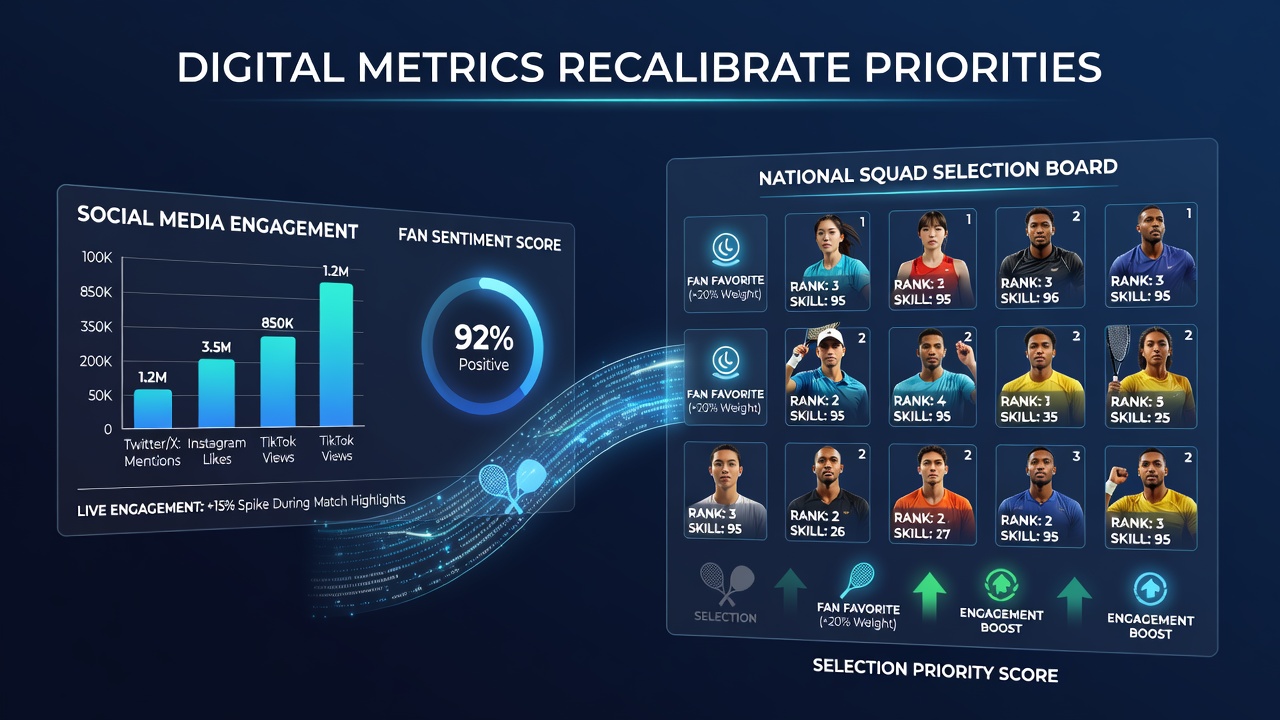
National federations overseeing racket and paddle disciplines now integrate digital fan engagement metrics into their selection frameworks for international squads, with data points such as social media interactions, streaming viewership numbers, and app-based participation rates influencing decisions alongside traditional performance indicators. Federations track these metrics through platforms that aggregate likes, shares, comments, and video completion rates for athletes competing in tennis, badminton, table tennis, squash, and pickleball events. This approach gained momentum as governing bodies sought to align team compositions with audience interests that drive sponsorship revenue and broadcast deals.
Defining Digital Fan Engagement in These Sports
Digital fan engagement encompasses measurable interactions that occur when supporters follow players through official apps, social channels, and streaming services, and organizations like the International Table Tennis Federation compile reports showing how these figures correlate with ticket sales at major tournaments. Researchers at institutions such as the University of Melbourne documented patterns where athletes with higher engagement scores received priority consideration during squad announcements for events like the 2026 World Team Championships. Metrics include follower growth rates, sentiment analysis from comments, and cross-platform reach that extends beyond match results alone.
Selection committees review these numbers quarterly, combining them with on-court statistics to create composite profiles for each candidate. Data from the Badminton World Federation reveals that players who generate consistent online discussion during regional qualifiers often secure spots over peers with marginally superior head-to-head records but lower visibility. This recalibration reflects broader shifts in how federations measure an athlete's contribution to the sport's commercial ecosystem.
Case Examples Across Disciplines
In tennis, national associations in Europe and Asia began weighting social metrics more heavily after 2024 data showed that certain doubles pairings attracted significantly larger streaming audiences than higher-ranked singles specialists. Observers noted that teams announced for the Davis Cup ties in July 2026 incorporated players whose highlight reels had accumulated millions of views on federation channels, even when their world rankings sat outside the top twenty. Similar adjustments appeared in table tennis selections for the Asian Games cycle, where engagement analytics helped identify athletes capable of expanding the sport's appeal in emerging markets.
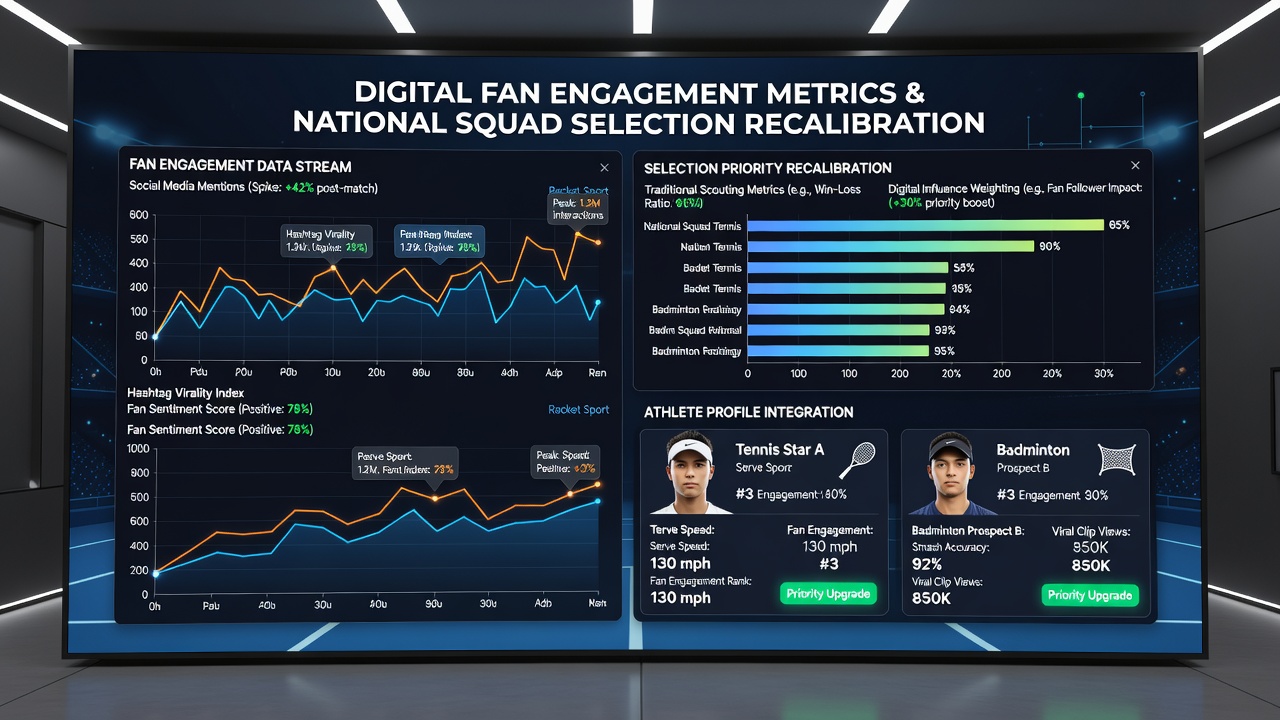
Pickleball federations in North America adopted parallel systems, with reports from the USA Pickleball Association indicating that digital interaction scores influenced roster choices for the 2026 Pan American Games. Athletes who maintained active content series demonstrating training routines or community outreach events frequently ranked higher in internal evaluations. Squash governing bodies followed suit, using engagement dashboards to prioritize players whose matches generated sustained discussion in regions where the sport seeks growth.
Integration With Traditional Criteria
Selection protocols still require athletes to meet minimum performance thresholds set by international ranking systems and recent competition results, yet digital metrics serve as tiebreakers when multiple candidates present comparable records. Analysts from the European Olympic Committees found that federations apply weighted algorithms where fan data accounts for fifteen to twenty-five percent of the overall evaluation score depending on the discipline. This balance allows committees to maintain competitive integrity while responding to audience trends that affect long-term funding and media coverage.
Training programs have adjusted accordingly, with national academies incorporating media training modules that teach players how to cultivate authentic online presence without compromising preparation time. Data collected through 2025 and into mid-2026 shows measurable increases in squad diversity as engagement metrics highlight talent from underrepresented regions who might otherwise remain overlooked by conventional scouting networks.
Conclusion
Federations continue refining these systems through pilot programs that test correlations between engagement spikes and subsequent revenue outcomes at major events. The approach has produced documented shifts in how national squads are assembled across racket and paddle sports, with digital metrics functioning as an additional lens rather than a replacement for established performance standards. As more organizations adopt unified tracking platforms, the role of fan interaction data in selection processes is expected to expand in measured increments tied to verified commercial and developmental results.