Patterns of Travel Fatigue Guiding Rotations in Extended International Cricket Tours
Written by Frankie Müller · Jul 31, 2026
Patterns of Travel Fatigue Guiding Rotations in Extended International Cricket Tours
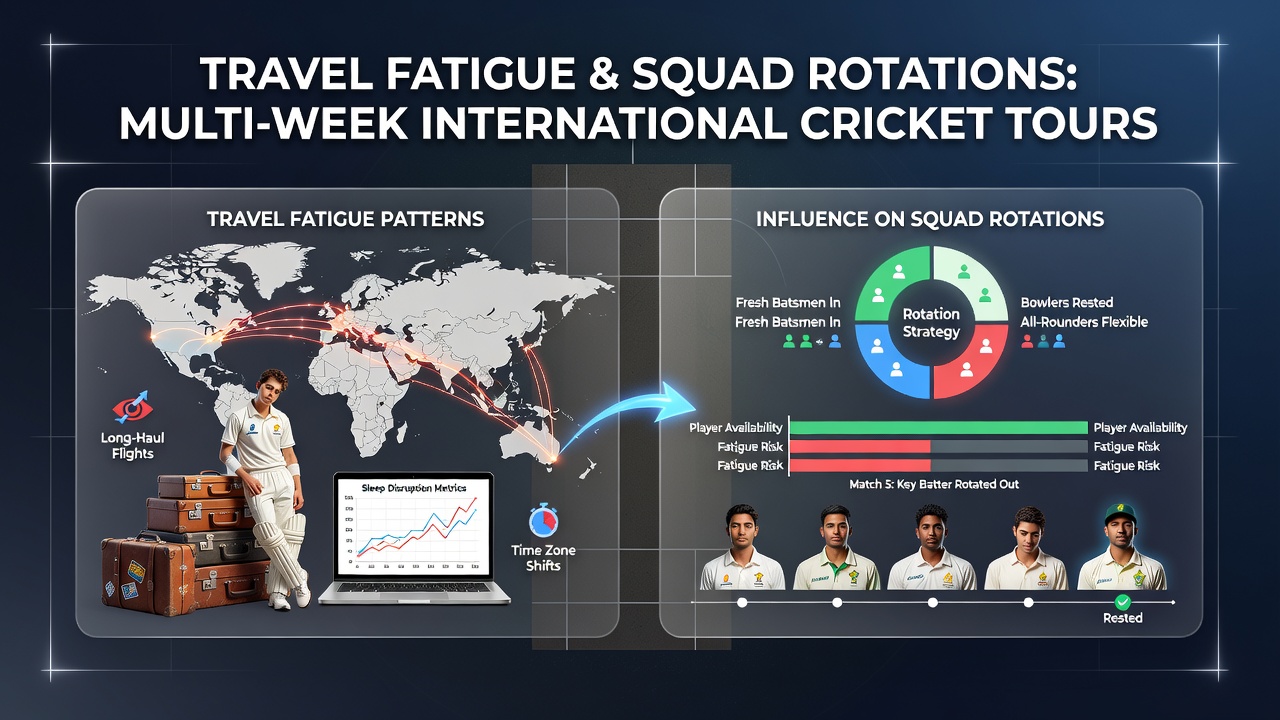
International cricket tours that stretch across multiple weeks force teams to confront travel fatigue as a central factor in squad planning, and data from recent series show clear links between flight durations, time zone shifts, and rotation decisions. Teams track recovery metrics closely because cumulative effects from repeated long-haul journeys often surface after three or four weeks on the road, leading selectors to adjust lineups before performance dips become measurable on the field.
Core Elements of Travel Fatigue in Cricket
Cricket schedules place teams on flights that cross several time zones within short windows, and studies compiled by sports science groups indicate that recovery from a 12-hour journey typically requires five to seven days for full restoration of sleep patterns and reaction times. Bowlers face steeper challenges than batters because their actions demand precise timing and explosive power, while fielding standards drop when athletes accumulate sleep debt across consecutive legs of a tour. Observers note that humidity combined with travel compounds these effects in destinations like the Caribbean or South Asia, where matches follow immediately after arrival.
Teams now collect biometric data through wearable devices to monitor heart rate variability and sleep quality, and figures from tours between 2023 and 2025 reveal that players logging less than six hours of quality sleep on three consecutive nights show a 15 percent rise in error rates during training drills. These measurements guide early rotation choices rather than waiting for visible signs of tiredness in matches.
Observed Patterns Across Recent Tours
Multi-week engagements such as the 2024-2025 Australia-India Test series demonstrated how fatigue accumulates differently depending on routing, and analysts recorded that squads flying via the Middle East rather than direct long-haul paths maintained steadier performance levels in the middle overs. Data shows that eastward travel produces slower adaptation than westward journeys, prompting management groups to build extra rest days into itineraries when moving from South Africa to New Zealand.
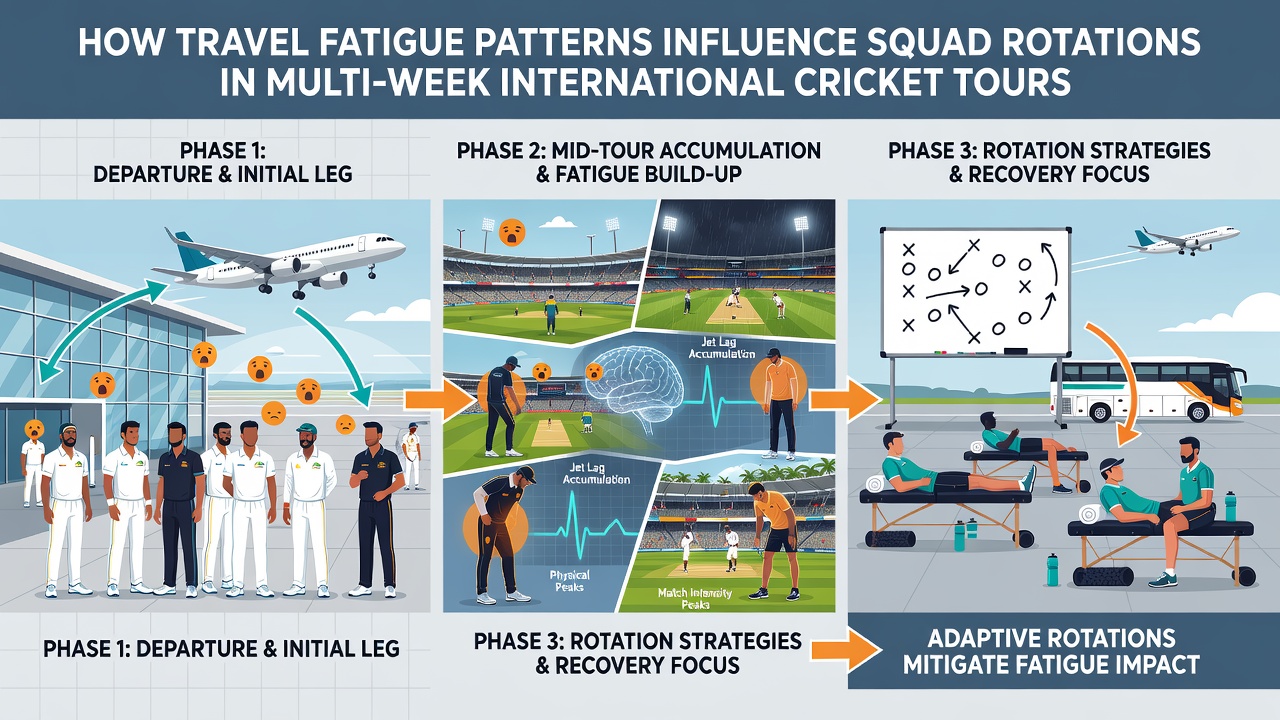
July 2026 schedules include several bilateral series that cross hemispheres twice within six weeks, and preliminary planning documents indicate selectors intend to rotate seam bowlers after every two Tests when total flight time exceeds 30 hours. Historical records from similar 2023 tours in the same window confirm that teams employing staggered rotations avoided the sharp decline in bowling speeds that appeared in the final two matches of longer unbroken campaigns.
Rotation Strategies Shaped by Fatigue Data
Selectors balance individual recovery profiles against team balance, and reports from national boards show that fast bowlers receive priority in rotation discussions because their workloads correlate most directly with injury incidence after extended travel. Spinners and batters often remain in the side longer since their skill sets degrade more gradually under fatigue, allowing management to maintain core combinations while resting key pacers. One study released by the Australian Institute of Sport tracked 40 players across three tours and found that those rotated after 18 days of travel retained 92 percent of baseline bowling speeds compared with 78 percent for those who stayed in the XI throughout.
Communication between medical staff and coaches has grown more structured, and protocols now include pre-tour simulations of flight schedules to predict when certain players will reach critical fatigue thresholds. These simulations help avoid situations where an entire pace attack needs simultaneous rest, preserving match-winning options even late in a series.
Case Examples from Multi-Week Engagements
During a 2025 England tour of India that lasted five weeks, the visiting side rotated three frontline seamers after the third Test once cumulative air time reached 28 hours, and subsequent match statistics showed improved economy rates in the final two games compared with earlier stages. Similar adjustments occurred in a Pakistan tour of Australia the same year, where selectors inserted a specialist spinner earlier than planned to rest a bowler whose sleep data had flagged elevated risk. Such moves reflect data-driven approaches rather than reactive changes after results turn.
Conclusion
Travel fatigue continues to shape squad decisions because objective measurements now provide reliable signals well before match output declines. Boards that integrate flight data, biometric tracking, and historical performance records achieve more consistent results across extended schedules, and the pattern holds whether tours move eastward or westward. Future calendars that cluster high-travel periods will likely accelerate adoption of these rotation frameworks across all full-member nations.