Pit Lane Adjustments Reshape Constructor Standings in Endurance Racing Seasons
Written by Willa Jenkins · Jul 1, 2026
Pit Lane Adjustments Reshape Constructor Standings in Endurance Racing Seasons
Endurance racing events such as those in the FIA World Endurance Championship span multiple hours and require teams to balance speed with reliability across extended stints. Constructors accumulate points through consistent finishes in each round, and pit strategy decisions directly influence position gains or losses that carry forward into season-long totals. Teams adjust fuel loads, tire compounds, and driver rotations based on track conditions and competitor pace, which alters lap times and overall race outcomes.
Core Elements of Pit Strategy in Endurance Formats
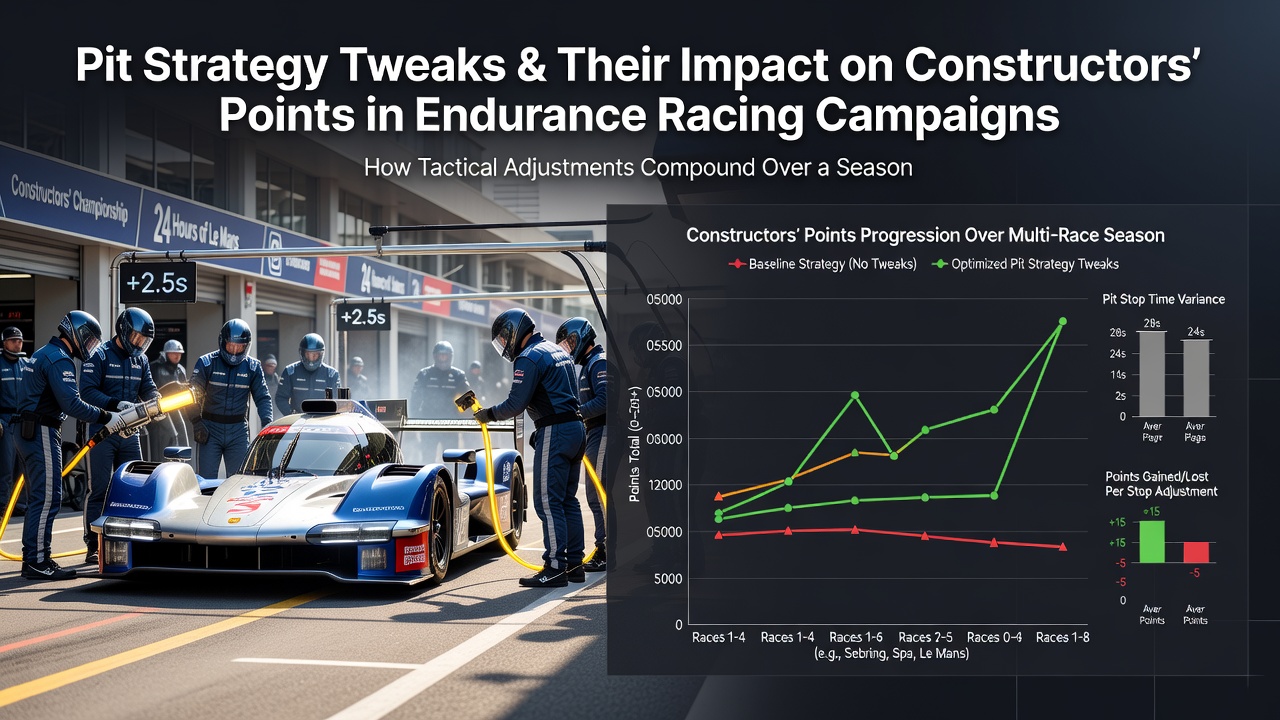
Constructors manage stops for refueling, tire changes, and driver swaps within strict time windows that determine whether a car maintains or improves its track position. Data from championship records shows that optimizing stop durations by even a few seconds can shift a team from mid-pack to podium contention in a single event. These incremental advantages compound when applied across the calendar because points systems reward top-six finishes with multipliers that favor reliability over outright wins.
Adjustments often involve trade-offs between aggressive tire choices that wear faster and conservative setups that extend stints. Observers note that teams tracking real-time telemetry during races modify plans mid-event to respond to safety car periods or weather shifts, which changes the final classification and subsequent championship tallies. The cumulative effect appears in season reviews where small per-race variances separate constructors by dozens of points after eight or nine rounds.
Multi-Race Campaign Dynamics and Point Accumulation
Season-long standings reflect patterns where early-season strategy experiments set baselines for later events. For instance, data collected during the 2025 campaign revealed that constructors who refined pit sequences after the opening rounds gained an average of 12 to 18 points per subsequent race through better execution. These gains arise because refined processes reduce time lost in the pits while preserving tire life for longer green-flag runs.
Points systems in series like the WEC allocate equal weight to each round, so consistent top finishes built on strategic stops accumulate steadily. Teams that underperform early due to suboptimal fuel mapping or delayed driver changes often spend mid-season adjusting procedures to close gaps. Records indicate that campaigns spanning from spring through autumn feature turning points around the summer schedule when heat and track evolution demand fresh tactical approaches.
Examples from Recent Championship Rounds
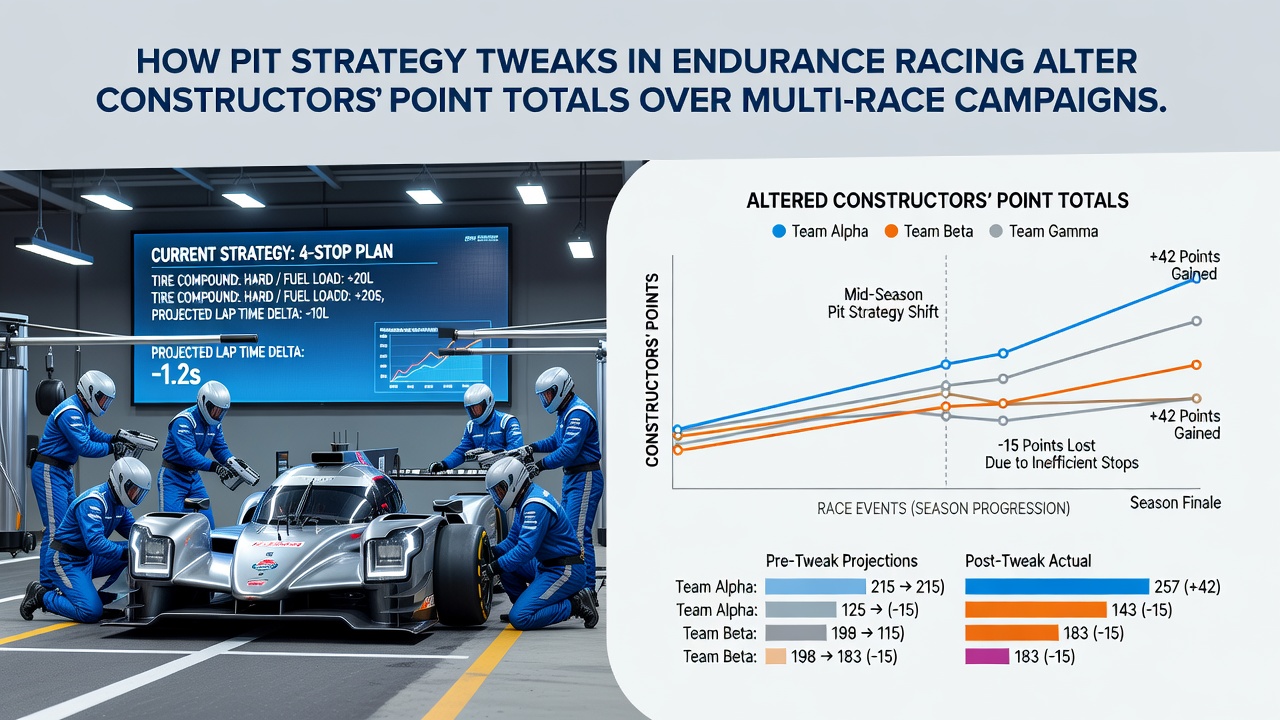
One documented case from the 2024 season involved a constructor that switched to a shorter fuel window in response to faster competitors and gained three positions in a single race, adding eight points that proved decisive in the final constructors' margin. Similar patterns emerged in subsequent events where the same team replicated the approach and maintained podium contention through the remainder of the year. Figures from official timing sheets confirm that such tweaks altered the order of finishers enough to shift the championship hierarchy by the season close.
Another instance occurred during a night stint where driver rotation timing allowed a team to avoid traffic and maintain clean air, resulting in a net points swing of 15 across two consecutive rounds. Those who've analyzed telemetry logs report that synchronization between pit and driver change windows minimizes stationary time and preserves momentum that translates directly into higher finishing positions over multiple events.
July 2026 Context and Ongoing Adjustments
During the July 2026 portion of the calendar, races held under warmer conditions prompted several constructors to experiment with altered tire pressure strategies and staggered fuel loads. Timing data released after those events showed measurable differences in average stint lengths that contributed to revised points gaps among the top teams. The patterns observed align with historical trends where mid-season refinements influence the trajectory of championship battles through the final rounds.
Industry reports from motorsport engineering groups highlight how data integration from onboard sensors supports these decisions, allowing teams to predict wear rates more accurately and adjust plans between events. This process repeats across campaigns and produces measurable shifts in total points because each optimized stop compounds into better average results.
Broader Implications for Championship Outcomes
Constructor points totals reflect the aggregation of these tactical choices rather than isolated race performances. Teams that maintain flexibility in pit execution across varied track layouts and conditions sustain higher averages that separate them from rivals by the end of multi-race seasons. Records maintained by series organizers demonstrate that the margin between first and fifth in the standings often narrows or widens based on cumulative seconds saved or lost in the pits.
According to information from the FIA, consistent application of refined procedures correlates with improved championship positions over full seasons. Additional analyses from North American endurance series further illustrate parallel effects where similar tweaks produce comparable point differentials.
Conclusion
Pit strategy modifications in endurance racing produce measurable changes in race classifications that accumulate into altered constructor standings after multiple events. Data across recent seasons confirms that refinements in stop execution, fuel management, and driver timing contribute to points differentials that define championship results. These patterns continue to shape outcomes in ongoing campaigns through systematic adjustments applied round after round.