Quiet Lineup Tweaks Shape Stats Across Global Sports Arenas
Written by Devon Schwarz · May 27, 2026

Quiet Lineup Tweaks Shape Stats Across Global Sports Arenas
Lineup modifications in professional leagues and circuits often trigger measurable shifts in both collective and personal performance indicators, and these patterns emerge consistently across multiple disciplines and continents. Teams adjust rosters for injury recovery, tactical needs, or contractual reasons, while data tracking systems record corresponding changes in metrics such as scoring efficiency, defensive contributions, and possession values. Observers note that these adjustments do not always produce immediate headline results, yet longitudinal records from organizations like the International Olympic Committee reveal gradual movements that accumulate over tournament phases.
Team-Level Statistical Responses
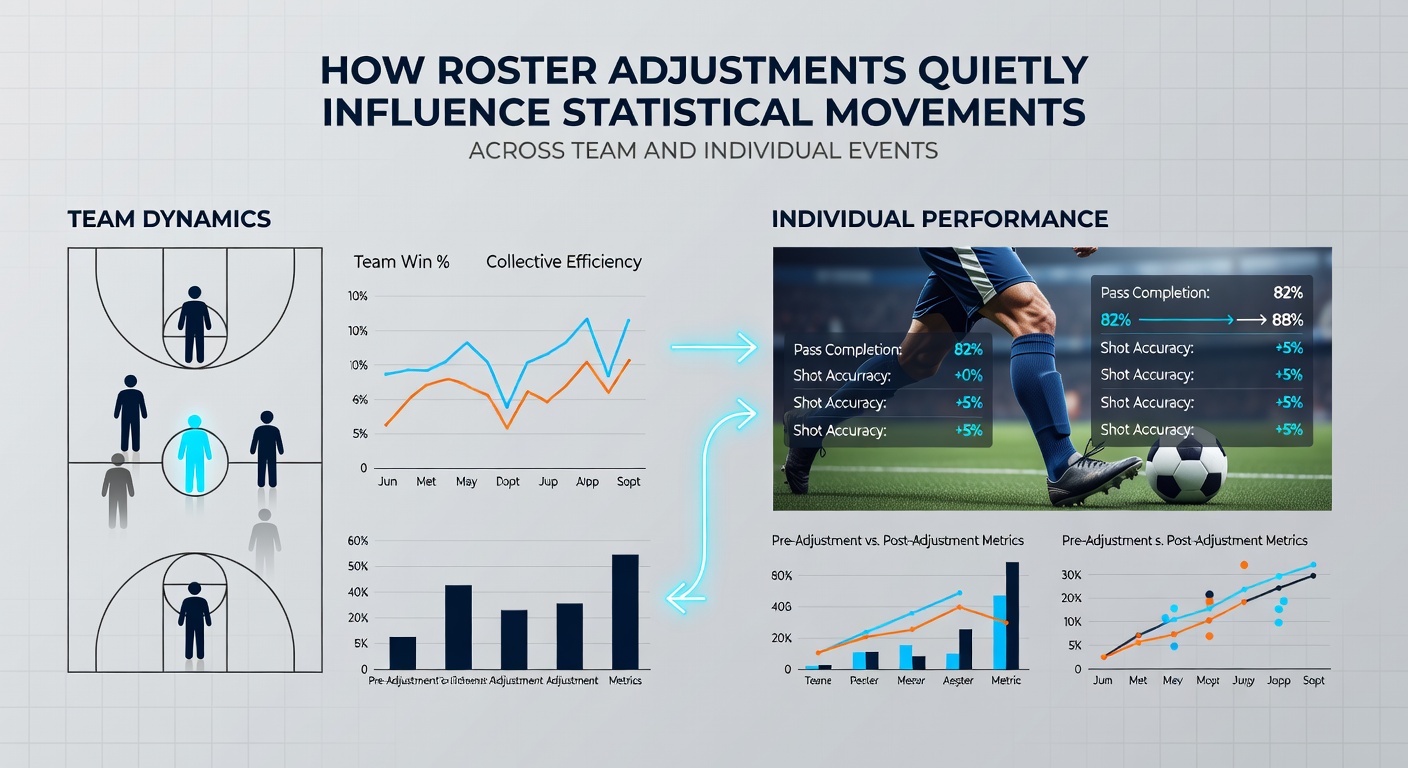
Coaches replace key contributors and team aggregates adjust within defined ranges, according to season-long compilations maintained by leagues in Europe and North America. A forward rotation in soccer circuits, for instance, frequently correlates with altered pass-completion percentages and expected-goal differentials when new combinations integrate. Researchers tracking European club competitions have documented how midfield substitutions alter pressing intensity values, which in turn influence opponent turnover rates recorded in official match reports. These team-wide movements appear across domestic schedules and continental tournaments alike, creating traceable ripples that analysts compare against baseline figures from prior campaigns.
Baseball organizations in North American and Asian circuits demonstrate similar dynamics when bullpen compositions shift. Relief-pitcher insertions modify earned-run averages and strikeout-to-walk ratios at the squad level, and data sets compiled through May 2026 continue to show these patterns holding across regular-season segments. League statisticians record the adjustments without assigning causation, yet the numerical trends persist in publicly available repositories maintained by governing bodies.
Individual Metric Fluctuations
Players entering or exiting starting roles experience distinct statistical trajectories that stand apart from their prior benchmarks. Point guards in basketball leagues, for example, post different assist-to-turnover ratios after joining new rotations, and tracking systems maintained by the NBA and FIBA capture these variations at the player level. Wing players who receive increased minutes often register elevated rebounding totals while their shooting percentages stabilize or decline depending on shot selection patterns observed in game logs.
Swimming and track circuits provide parallel examples where relay-team alterations affect individual split times recorded by timing federations. Athletes who transition between individual and team events during a single meet see their personal bests recalibrated against updated competition data, and records from the World Athletics federation document such shifts without external commentary. The statistical movements remain measurable even when the underlying reasons for roster decisions stay internal to each delegation.
Cross-Circuit Comparisons
Global events compress these effects into shorter windows, and federations responsible for multi-sport programs collect standardized metrics that allow direct comparison. Handball squads in European and South American tournaments, for instance, rotate defensive specialists and observe corresponding changes in save percentages tracked by the International Handball Federation. Volleyball rotations produce analogous movements in attack efficiency and block numbers, with data sets released after each major championship showing consistent directional trends.
Researchers affiliated with academic institutions in Australia and Canada have examined roster continuity across Olympic cycles and noted that squads with higher mid-tournament turnover display wider variance in final placement metrics. These observations draw from aggregated results rather than single competitions, and the patterns hold when data sets are segmented by sport and gender. External analyses from bodies such as the Australian Sports Commission further illustrate how such statistical dispersion appears in both summer and winter disciplines.
Measurement Practices and Data Sources
Modern tracking technologies record every substitution and its temporal placement, which enables precise attribution of statistical segments to specific roster configurations. Optical systems and wearable sensors feed raw inputs into centralized databases maintained by leagues and international federations, and these repositories permit granular queries that isolate roster variables. Analysts apply consistent methodologies across seasons, ensuring that movements attributed to lineup changes remain distinguishable from external factors such as venue or weather conditions.
Publicly released reports from organizations including the NCAA and the Canadian Olympic Committee supply the underlying counts that support these examinations. The figures reveal recurring correlations between rotation frequency and variance in key performance indicators, while the absence of causal language in official releases keeps interpretations grounded in observed numbers alone.
Conclusion
Roster adjustments continue to register across statistical categories in team and individual events worldwide, and the documented movements accumulate through structured data collection by multiple governing entities. Patterns identified in league archives and federation reports remain available for ongoing review, while technological improvements in measurement sustain the capacity to track these effects at increasing resolution through future cycles.