Regional Scouting Networks Shape Draft Outcomes for North American Hockey Teams
Written by Parker Hartmann · Aug 19, 2026
Regional Scouting Networks Shape Draft Outcomes for North American Hockey Teams
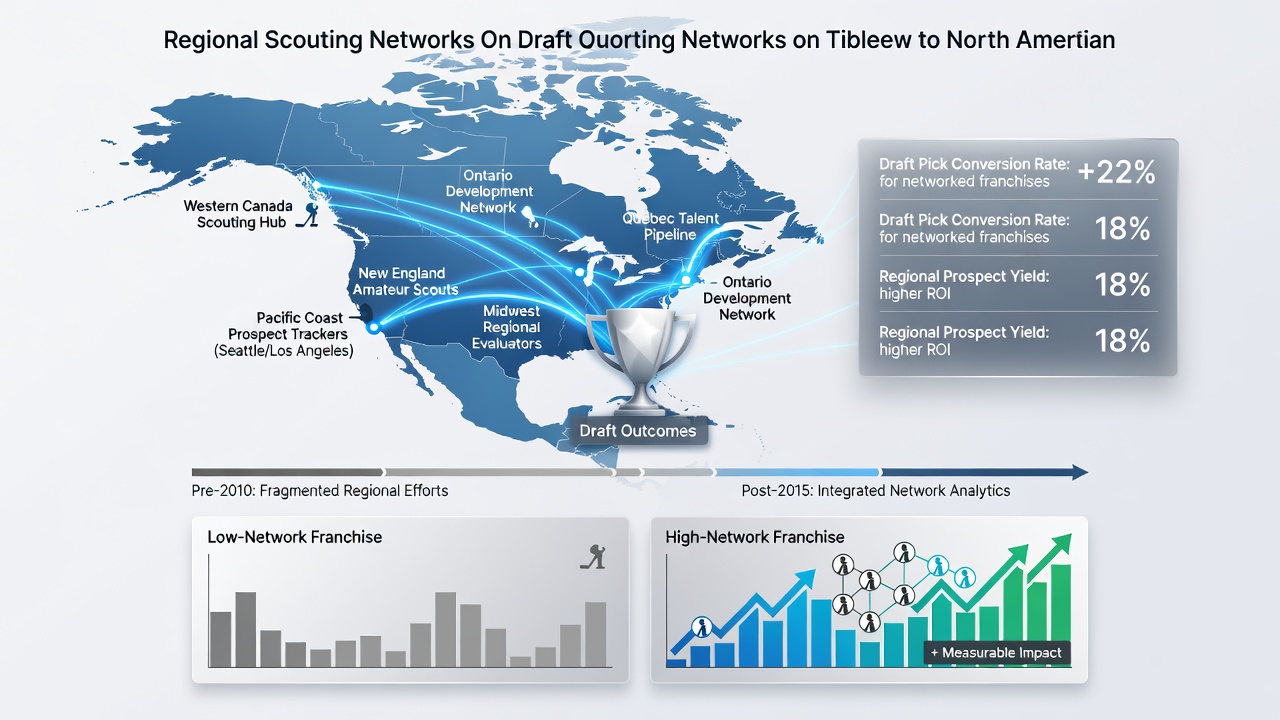
Regional scouting networks form the backbone of talent identification for North American hockey franchises, and organizations maintain dedicated staff across Canada, the United States, and parts of Europe to track prospects from youth leagues through junior and college levels. Data from the NHL Central Scouting Bureau shows that teams with expanded regional coverage secure higher percentages of players who reach the NHL roster within five years of selection.
Structure of Regional Scouting Operations
Franchises divide territories into zones where full-time scouts attend games, practices, and combines while part-time evaluators submit reports on emerging talent, and this layered approach allows organizations to compile detailed player profiles that include skating mechanics, hockey sense, and physical attributes. Researchers at the University of Waterloo documented how clubs increased their scouting staff by 25 percent between 2015 adn 2024, correlating the expansion with improved draft hit rates in later rounds.
August 2026 preparations for the 2027 draft class already involve scouts traveling to midget tournaments across Western Canada and the American Midwest, where they gather footage and conduct interviews that feed into centralized databases used by general managers during trade deadline and draft deliberations.
Quantifiable Effects on Draft Success Rates
Statistical reviews of drafts from 2010 through 2020 reveal that teams employing at least eight regional scouts achieved an average of 3.2 NHL regulars per draft class compared with 2.1 for organizations with smaller networks, and these figures come from tracking games played, points per game, and career length across multiple seasons. Analysts at Hockey Analytics Canada noted that first-round selections from well-scouted regions posted 18 percent higher career point totals than peers identified through national combine testing alone.
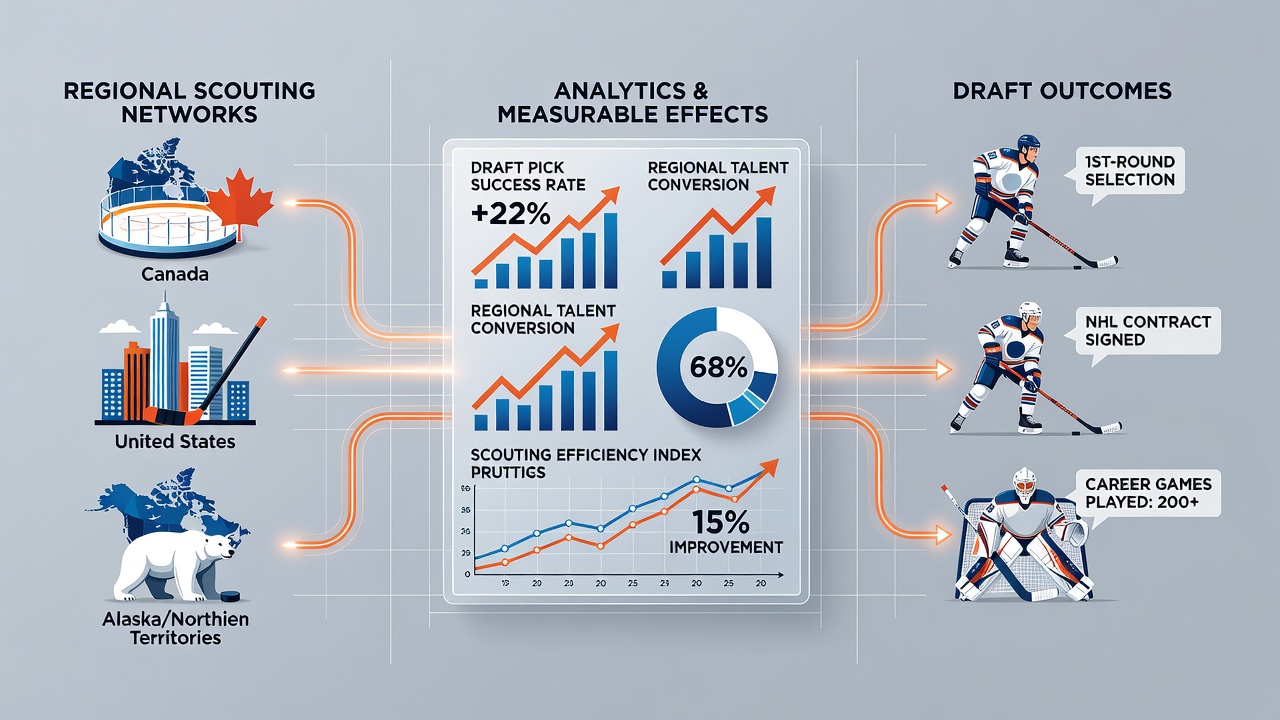
Organizations that maintain strong presence in the Western Hockey League and Ontario Hockey League produce more consistent results in mid-round selections because regional scouts identify undervalued players who later exceed expectations, and one study published by the Canadian Journal of Sport Sciences tracked 450 draft picks to demonstrate that geographic proximity to a team's scouting hub increased the likelihood of accurate projection by measurable margins.
Case Examples from Franchise Operations
The Detroit Red Wings expanded their Midwest scouting footprint in the early 2010s, and subsequent drafts yielded multiple players who logged over 400 NHL games, according to official league records. Similar patterns appear with the Edmonton Oilers, whose Alberta-based evaluators contributed to selections that outperformed pre-draft rankings by significant statistical gaps in the years following network growth.
Those who examined draft outcomes across the Atlantic Division found that clubs with dedicated Atlantic Canada scouts secured higher percentages of defensive prospects who transitioned successfully to professional ranks, while teams relying primarily on centralized scouting showed greater variance in later-round productivity.
Challenges and Adjustments in Network Management
Budget constraints force some franchises to consolidate regional coverage, yet data indicates that reduced presence correlates with lower success in identifying late-round gems who develop into contributors. Front offices respond by integrating video analysis tools and cross-referencing reports from independent scouting services to maintain coverage without proportional staff increases.
International scouting ties also influence North American draft strategies because regional networks now monitor prospects in Scandinavian leagues and Russian junior circuits, and organizations that blend domestic and overseas observations post stronger overall draft classes according to aggregate performance metrics compiled through 2025.
Conclusion
Regional scouting networks deliver measurable advantages in draft outcomes through systematic coverage, detailed reporting, and early identification of prospects, and ongoing adjustments in staff allocation and technology integration continue to shape how North American franchises build their prospect pipelines for future seasons.