Seasonal Pressures: How Packed Fixtures Reshape Player Output in Top Soccer Divisions
Written by Devon Schwarz · Aug 26, 2026
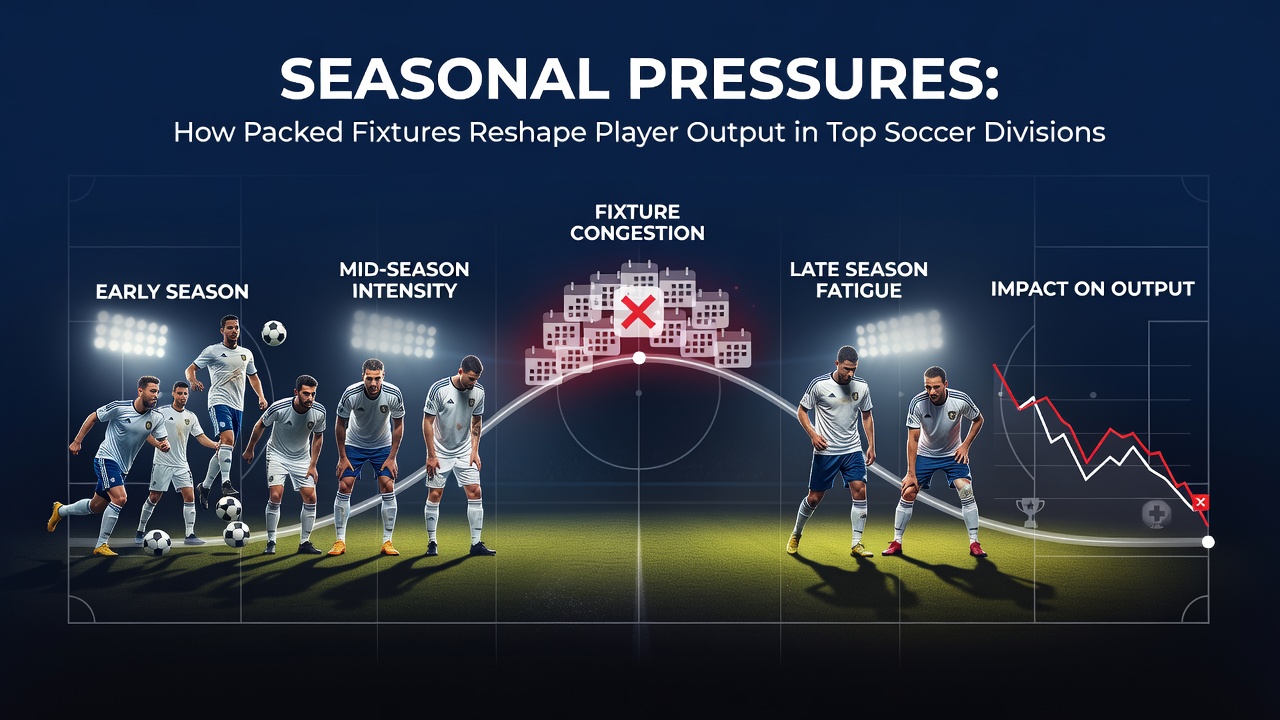
Seasonal Pressures: How Packed Fixtures Reshape Player Output in Top Soccer Divisions
Top soccer divisions across Europe face recurring periods of fixture congestion that alter player output in measurable ways, and data from multiple leagues shows consistent patterns in distance covered, sprint frequency, and recovery markers during those stretches. Researchers tracking matches in the Premier League, Bundesliga, La Liga, and Serie A have documented how clusters of games within short windows shift performance baselines, particularly when teams also juggle domestic cups and European commitments. Observers note that August often marks the first intense surge after pre-season, with the 2026 calendar already projecting similar density once new seasons begin amid lingering effects from the prior international tournament cycle.
Fixture Density Patterns Across Leagues
League schedules reveal clear spikes where teams play three matches in eight days or four in fourteen, and analysts compiling Opta-derived statistics have linked those blocks to declines in high-intensity running. In the Bundesliga, for instance, clubs averaging more than one match every 3.5 days during winter months record lower team pressing intensities compared with evenly spaced periods, while Serie A data indicates comparable drops in successful tackles per ninety minutes. Those who've studied this know the effect compounds when travel distances increase, since recovery time shrinks and neuromuscular fatigue accumulates across positions.
Premier League records from recent campaigns illustrate the point through midfielders who log reduced accelerations in the second game of a midweek-weekend double, whereas forwards maintain shooting volume but see conversion rates dip slightly. La Liga schedules, shaped by additional commitments for clubs in continental competitions, produce parallel outcomes where full-backs cover fewer progressive passes during congested phases. Evidence suggests the pattern holds across age groups, though younger players sometimes display faster rebound in subsequent weeks when rotation policies are applied early.
Physical and Technical Output Shifts
Studies tracking GPS and heart-rate data have quantified how total distance covered falls by roughly 3 to 7 percent in the third match of a congested sequence, while sprint counts decrease more noticeably among wide players. Recovery metrics such as creatine kinase levels rise in parallel, and medical staff monitoring these markers report longer return-to-baseline intervals when rest days drop below forty-eight hours. Technical outputs follow suit: pass completion percentages remain relatively stable, yet key passes and expected goal contributions trend downward in later fixtures of a cluster.
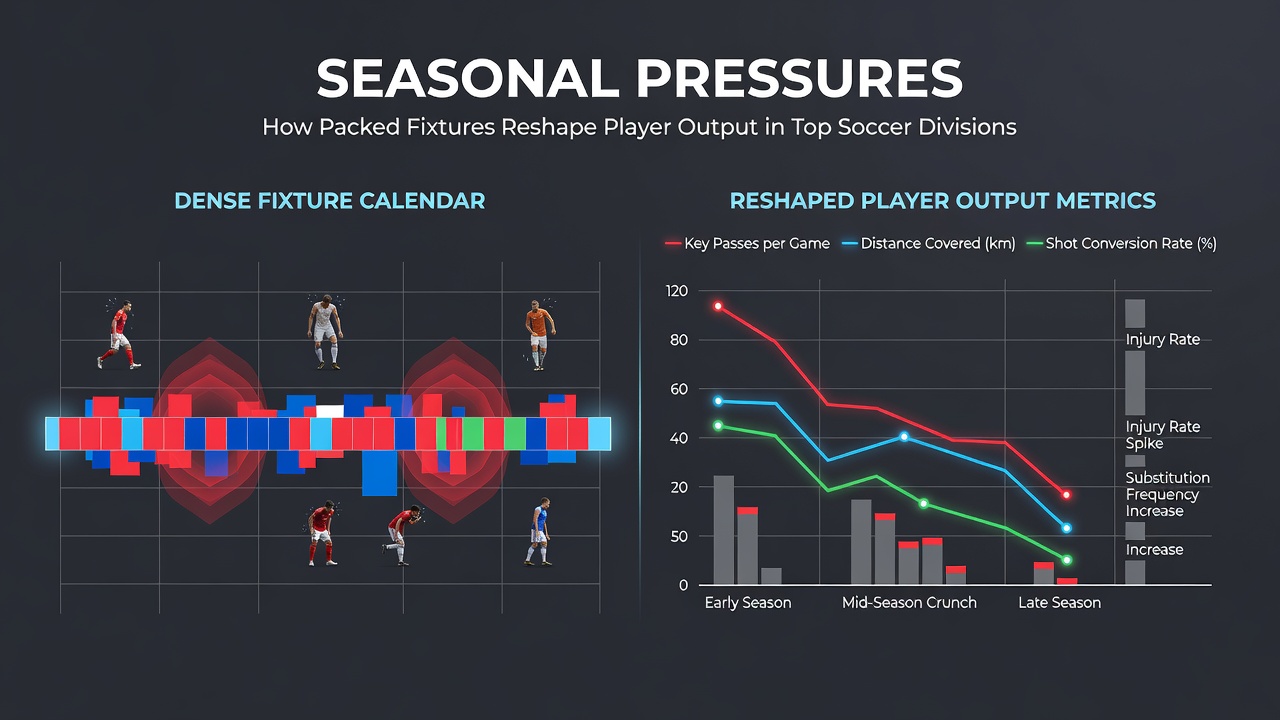
One longitudinal review of Bundesliga and Premier League matches found that central defenders register the largest relative drop in aerial duel success when fixture gaps narrow, whereas goalkeepers exhibit steadier distributions but face elevated shot volumes from fatigued defensive lines ahead of them. Researchers at institutions including the German Sport University Cologne have cross-referenced these figures with match outcome data, confirming that points per game averages soften for squads experiencing the highest fixture density without corresponding squad depth.
Rotation Strategies and Squad Management
Coaching staffs respond with structured rotation plans that distribute minutes across multiple positions, and clubs with deeper benches maintain closer to baseline output levels throughout congested stretches. Data from the 2024-2025 season onward shows teams that rotate at least three outfield players between consecutive high-stakes matches preserve higher pressing regains compared with those relying on near-identical lineups. August 2026 projections already factor in similar planning needs once domestic and European calendars align again after summer internationals.
Case examples include squads that integrate under-23 prospects during midweek fixtures, allowing established starters to preserve freshness for weekend league games. Those who've examined these approaches note measurable preservation of top-end speed metrics among rotated players, although integration carries its own adjustment period for tactical cohesion. Industry reports from bodies such as the European Club Association highlight how larger squads mitigate output drops, while smaller ones experience steeper declines in both physical and technical categories.
Longer-Term Seasonal Trends
Across full campaigns, cumulative fixture load correlates with increased soft-tissue injury incidence after the winter break, and league-wide figures reveal a secondary spike in March and April when European ties overlap with domestic title races. Performance analysts tracking these trends emphasize that early-season congestion in August sets the tone for how teams manage later clusters, since initial fatigue can compound if recovery protocols lag. Academic papers from research groups in Australia and Canada have replicated some of these European findings using comparable workload models, underscoring the universal nature of the challenge regardless of league geography.
Conclusion
Fixture congestion continues to reshape output metrics in top divisions through documented changes in physical, technical, and recovery indicators, and ongoing monitoring by clubs and researchers provides the data needed to refine rotation and load-management approaches ahead of each new season. August 2026 will likely follow established patterns once schedules intensify, giving further opportunities to test interventions that have shown promise in prior congested windows.