Sensor Networks Transforming Roster Decisions in Championship Events
Written by Parker Hartmann · Jun 19, 2026

Sensor Networks Transforming Roster Decisions in Championship Events
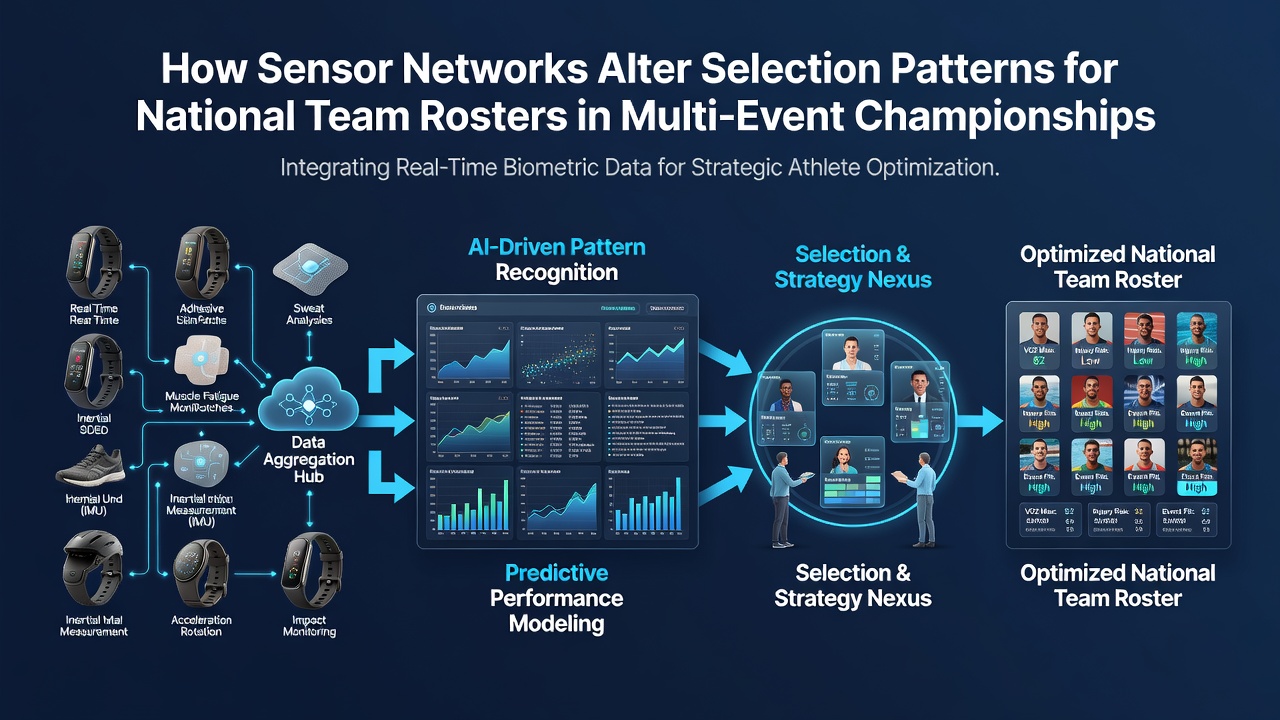
Sensor networks now feed continuous streams of biometric and kinematic data into selection committees that manage national teams for multi-event championships, and this flow has shifted how coaches and federations evaluate candidates beyond traditional performance markers. Devices embedded in clothing, equipment, and training venues capture metrics such as heart rate variability, muscle activation patterns, acceleration forces, and recovery rates, then transmit those readings to centralized platforms where analysts compare athletes across entire squads. Those comparisons allow committees to identify individuals whose physiological profiles align with the demands of specific events within a larger championship program. Data integration occurs through standardized protocols that federations adopted after initial pilot programs in the late 2010s. National Olympic committees in several countries began requiring sensor compliance for all athletes on shortlists, and the resulting datasets revealed correlations between certain workload thresholds and medal contention rates. Researchers at institutions across North America and Europe documented how these thresholds influenced final roster cuts, particularly when two athletes posted similar competition results yet displayed divergent fatigue accumulation curves.Core Metrics Driving Selection Changes
Selection panels now weigh longitudinal sensor outputs alongside competition results, and this dual lens alters priorities in events that span multiple disciplines. For endurance segments within championships, committees examine sustained power output trends recorded during simulated race conditions, while power-based events emphasize peak force and asymmetry readings that sensors detect during plyometric drills. The combination produces composite scores that rank athletes according to projected contribution across an entire multi-day schedule rather than isolated peaks. Observers note that injury risk indicators extracted from sensor data have gained equal footing with raw speed or strength numbers. When an athlete's muscle load exceeds established recovery windows for three consecutive microcycles, committees often favor a lower-risk alternative even if that choice sacrifices marginal performance gains in a single discipline. This adjustment appears most pronounced in team-based multi-event formats where cumulative fatigue across relays or combined events can determine overall standings.Implementation Patterns Ahead of 2026 Events
Preparations for the 2026 Winter Games illustrate how federations apply sensor-derived insights during final roster phases. National teams in ski and skating disciplines integrated real-time feedback loops that adjusted training loads based on daily sensor uploads, and those adjustments produced measurable shifts in selection outcomes by early summer 2026. Federations that maintained consistent data collection across domestic and international camps reported narrower gaps between projected and actual roster stability compared with prior cycles. One study conducted by a Canadian research consortium tracked how sensor thresholds altered the composition of cross-country and biathlon squads, revealing that athletes previously overlooked due to slightly slower race times advanced when their recovery metrics outperformed higher-ranked peers. Similar patterns emerged in European federations preparing for combined events, where sensor networks highlighted individuals capable of maintaining technical precision despite elevated heart rate zones during successive starts.