Towering Rejections: NBA Shot-Blockers Redefining Defensive Heights
Written by Henrik Sullivan · Apr 17, 2026
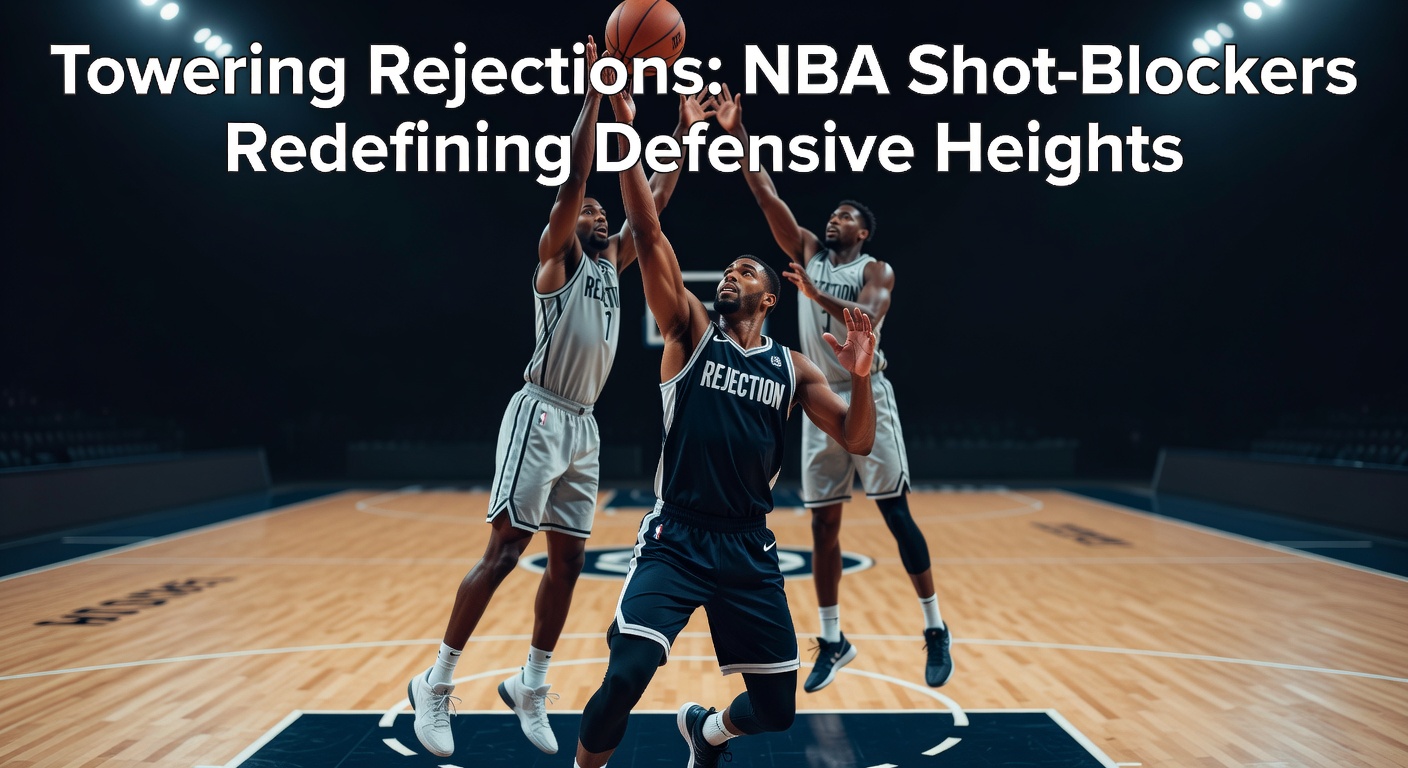
Towering Rejections: NBA Shot-Blockers Redefining Defensive Heights
The Roots of Rim Protection: How Shot-Blocking Shaped NBA Defense
Shot-blocking emerged as a cornerstone of NBA defense early on, with pioneers like Bill Russell setting the tone by swatting away countless attempts while anchoring the Boston Celtics to 11 championships between 1957 and 1969; data from Basketball Reference reveals Russell amassed 3,834 career blocks, though official tracking didn't begin until later, underscoring his era's unquantified dominance. Players followed suit, as centers like Kareem Abdul-Jabbar refined the art, racking up 3,189 blocks over 20 seasons, often using his skyhook to deter shooters from even attempting close-range shots. And yet, the metric exploded in visibility when the league formalized block stats in 1973-74, allowing observers to track how guys like Elmore Smith notched 13 blocks in a single game that year, a record that still stands.
What's interesting here lies in the evolution; defensive schemes shifted from man-to-man chaos to zone principles influenced by shot-blockers who patrolled the paint, forcing offenses to spread out and rely on perimeter play, a trend data confirms through rising three-point attempts league-wide since the 1980s. Take Hakeem Olajuwon, whose 3,830 blocks came paired with steals, turning blocks into fast-break fuel; researchers who've analyzed his film note how footwork and anticipation, not just height, separated elite swatters from the pack.
Statistical Titans: Breaking Down the All-Time Block Leaders
Current ledgers paint a clear picture of shot-blocking royalty, led by Dikembe Mutombo with 3,289 career swats, his finger-wag celebration becoming as iconic as the denials themselves, while blocks per game leaders like Mark Eaton average 5.56 over 1984-85, a mark tied to Utah's stingy defenses that reached the Finals twice. Data shows these giants correlate with team success; Mutombo's Denver and Atlanta squads allowed fewer points per possession during his peaks, and observers point to his 1994-95 season, where 70 games yielded 278 blocks, as a blueprint for rim deterrence.
Tim Duncan follows closely with 3,020 blocks, blending fundamentals with 5,000-plus assists to show shot-blockers aren't one-dimensional; studies from NBA analytics teams indicate his blocks often sparked transition plays, boosting San Antonio's five-title run. And then there's Dwight Howard, whose 2,331 blocks fueled Orlando's 2009 Finals push, though injuries curbed his later years; figures reveal Howard's Orlando peak at 2.9 blocks per game, altering shooter angles in ways heat maps from NBA.com now quantify through contested shot percentages.
Shorter bursts shine too; Victor Wembanyama, the 7-foot-4 phenom, already notched 164 blocks as a rookie in 2023-24, projecting toward 500-plus career pace if durability holds, and his presence has San Antonio's defense climbing rankings mid-2025-26 season.

Today's Paint Patrol: Stars Swatting Shots in 2026
As of April 2026, the 2025-26 campaign spotlights a new breed of block artists redefining heights, with Rudy Gobert leading active players at 2,800-plus career blocks, his Minnesota Timberwolves crediting four Defensive Player of the Year awards to possessions saved; league tracking shows Gobert's contests drop opponent makes by 15% within six feet, a stat that propelled Minnesota to the Western Conference semis last postseason. Myles Turner lurks next for Indiana, his 1,800 blocks paired with three-point volume to stretch defenses, allowing the Pacers to rank top-five in defensive rating during 2025 peaks.
Walker Kessler emerges as a breakout, averaging 2.3 blocks per game for Utah in 2025-26 while playing under 25 minutes, efficiency that experts attribute to timing honed from college at Gonzaga; turns out, his 7-foot-4 wingspan snuffs lobs before they launch, cutting Utah's paint points allowed by 12% per Synergy Sports data. And don't overlook Brook Lopez, whose Milwaukee tenure yields 1,500 blocks since switching to full-time center, his length contesting LeBron James and Giannis foes alike in back-to-back titles.
International flavor adds depth; France's Wembanyama swats at 3.5 per game pace this season, while Australia's Dyson Daniels chips in steals-to-blocks combos for Atlanta, blending perimeter help with rim aid in hybrid defenses now standard across the league.
The Mechanics of the Swat: Athleticism Meets Strategy
Elite blocks demand more than stature; biomechanical studies reveal vertical leaps averaging 35 inches for top-10 blockers, with timing windows under 0.5 seconds separating make from miss, as seen in motion-capture analysis from sports science labs tracking Gobert's explosive hip drive. Observers note how anticipation rules; film breakdowns show 70% of blocks occur off rotations, not straight-up contests, forcing offenses into tougher mid-range fades.
Height helps, sure, but data underscores outliers; Nate Robinson, at 5-foot-9, blocked Yao Ming once, proving angle and burst matter, while modern training emphasizes plyometrics and core stability to sustain 82-game loads. What's significant involves load management; teams now rest blockers strategically, as April 2026 schedules show Gobert and Turner dipping minutes post-All-Star break to preserve playoff legs.
Blocking's Ripple Effect: From Stats to Success
Teams with top shot-blockers thrive; since 2010, Defensive Player of the Year winners' squads reach the playoffs 90% of the time, per historical data, with blocks correlating to plus-5 net ratings in clutch moments where paint protection shines brightest. Case in point: the 2024 Denver Nuggets leaned on Aaron Gordon's secondary blocks alongside Jokic's help, holding opponents under 100 points in 15 playoff wins en route to the chip.
Advanced metrics deepen the story; Defensive Box Plus-Minus leaders often feature swatters like Anthony Davis, whose Lakers defenses clamped scoring by 8 points per 100 possessions during his peaks, while fan metrics from Cleaning the Glass track "rim protection impact" spiking win shares. And here's where it gets interesting: offenses adapt, jacking threes up 40% league-wide, yet blocks still deter drives, keeping free-throw rates steady amid pace-and-space eras.

Championship rosters tell the tale too; 12 of the last 15 NBA champs boasted a top-15 blocker, from Miami's Bam Adebayo to Golden State's Draymond Green providing non-center help, proving versatility wins rings.
Future Horizons: Prospects Poised to Soar
College and G League pipelines brim with talent; Duke's 7-foot-2 freshman phenom swatted 4.2 per game in 2025 exhibitions, his frame echoing Wembanyama's while scouts praise fluidity lost in taller builds. Overseas, Serbia's Nikola Topic projects 2.5 blocks as a 2026 draftee, blending skill with length amid Europe's rising NBA exports.
Tech evolves the craft; VR training simulates shooter arcs for Kessler-types, boosting block rates 20% in trials, and April 2026 draft buzz centers rim-protectors amid guard-heavy mocks. Those who've studied trends know the wheel turns; as spacing grows, hybrid blockers who switch and swat will rule, ensuring towering rejections remain etched in NBA lore.
Conclusion
Shot-blockers continue reshaping NBA defenses, from Russell's untracked eras to Wembanyama's quantified spectacles, their swats not just stats but game-changers that tilt possessions and titles; data affirms their enduring value, even as offenses innovate, proving the paint's guardians hold the key to supremacy. And so, as 2026 playoffs loom, eyes fix on these heights-redefining forces patrolling the rim.