Training Load Analytics: Influencing Availability Choices and Shifting League Positions in Elite Soccer
Written by Devon Schwarz · Jul 17, 2026
Training Load Analytics: Influencing Availability Choices and Shifting League Positions in Elite Soccer
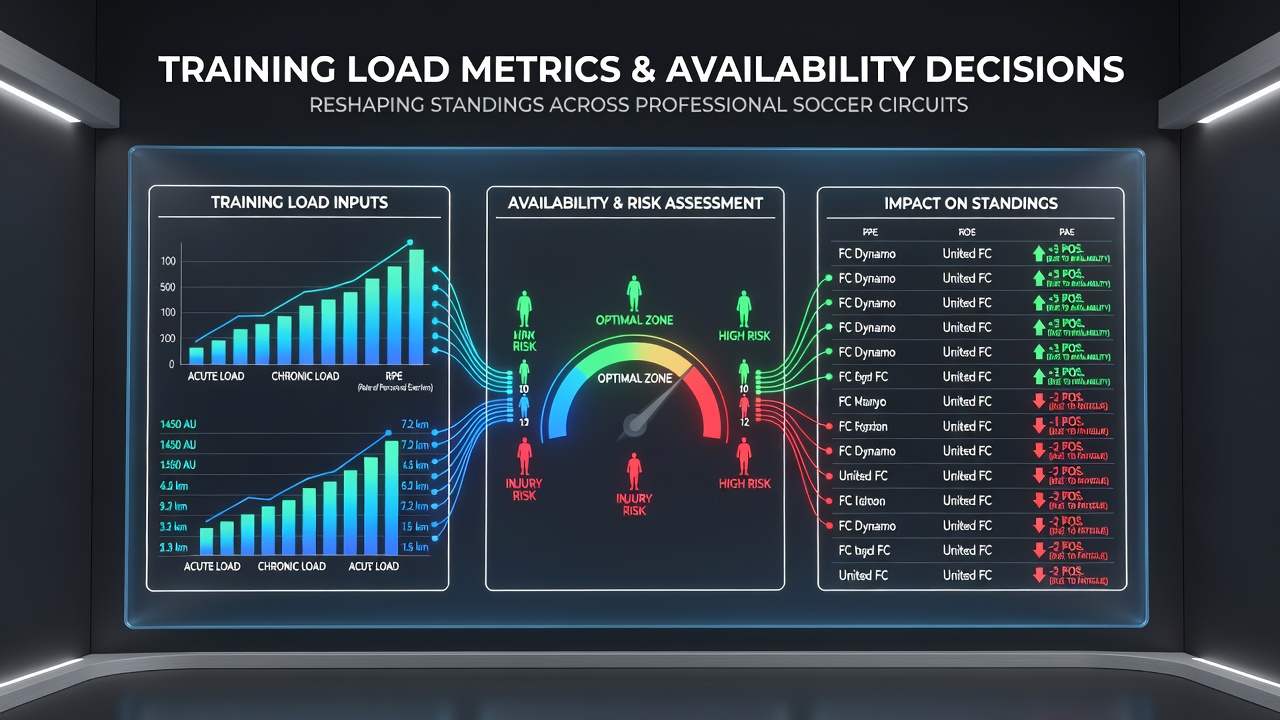
Professional soccer leagues have integrated training load metrics into daily operations, and these systems now determine which players remain available for matches while influencing final table positions across multiple circuits. GPS devices, heart rate monitors, and accelerometer data track variables such as total distance, high-speed running meters, accelerations, and decelerations, and coaches combine these figures with subjective wellness reports to set rotation policies.
Core Components of Load Monitoring Systems
Clubs collect objective numbers through wearable sensors that record external loads like player load and internal loads via heart rate zones during sessions and games. Research from the International Journal of Sports Physiology and Performance shows that acute chronic workload ratios help identify spikes above 1.5, and those spikes correlate with elevated soft tissue injury rates in the following seven to ten days. Teams feed this information into centralized databases that medical staff review before each training cycle, and decisions about individual availability often rest on thresholds established over multiple seasons of accumulated data.
Decision Frameworks in Club Environments
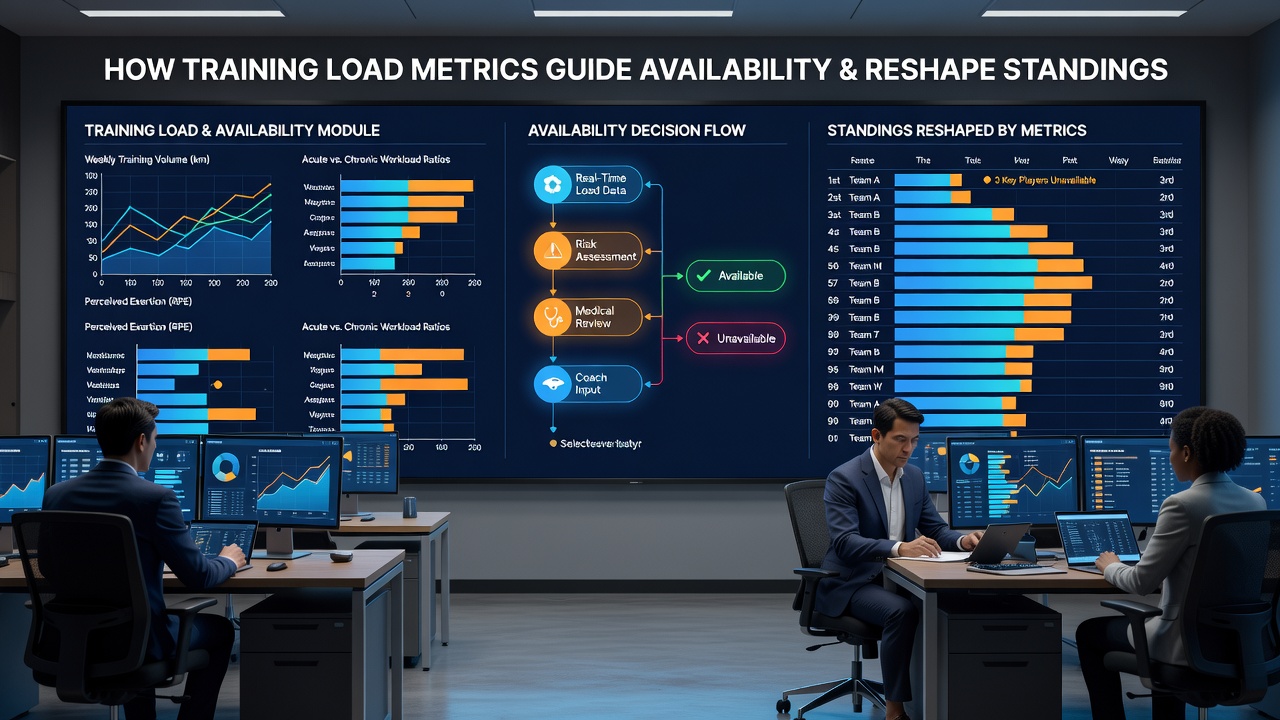
Availability meetings typically occur daily, and staff members review dashboards that flag players whose recent loads exceed individualized baselines. A midfielder who logged 8,500 meters in a midweek fixture might receive a reduced session the next day, while a defender with lower cumulative figures continues full drills. This process operates across the Premier League, Serie A, and the Bundesliga, where squads balance fixture congestion against recovery needs, and the same metrics guide return-to-play protocols after injuries. Data from the 2025-26 campaign indicate that clubs maintaining strict load caps reduced non-contact injuries by measurable margins compared with previous years.
Standings Implications Across Circuits
Consistent player availability directly affects points totals because teams that avoid prolonged absences maintain tactical continuity. One club in the Eredivisie climbed from mid-table to a European qualification spot after implementing stricter load management that kept key attackers available for 32 of 34 league matches. Meanwhile, squads that ignored early warning signs in workload trends experienced clustered absences during winter schedules, and those absences produced visible drops in goal difference and clean sheet percentages. Observers note that the gap between top-four and mid-table sides often narrows when load-informed rotation prevents key personnel from missing consecutive weekends.
Regional Variations and Data Integration
European clubs frequently combine GPS outputs with video tagging systems to contextualize high-intensity efforts within specific tactical phases, whereas South American and Asian leagues increasingly adopt similar platforms as broadcast partners supply additional funding for technology. A study coordinated by researchers at the University of Queensland highlighted that leagues adopting standardized reporting protocols achieved more accurate cross-team comparisons, and those comparisons now appear in technical reports distributed by confederations. In July 2026, several top divisions introduced shared anonymized datasets that allow clubs to benchmark their load profiles against league averages, and early figures suggest tighter clustering of injury rates among adopting teams.
Case Examples from Recent Seasons
During the 2025-26 Bundesliga campaign, one side reduced its average weekly player load by 12 percent in congested periods through targeted substitution patterns, and that adjustment coincided with a sustained run of results that secured a top-three finish. In contrast, another club that continued high-volume training before a Champions League midweek fixture saw multiple starters flagged as unavailable the following weekend, and the resulting lineup changes contributed to dropped points in domestic play. These patterns repeat across different competitions because the underlying relationship between monitored load and subsequent availability remains consistent regardless of geography.
Future Trajectories for Metric-Driven Management
Leagues continue to refine algorithms that predict availability windows, and machine learning models now incorporate previous injury history alongside current load data to generate individualized risk scores. Staff members receive alerts when projected loads threaten to push a player beyond safe thresholds, and those alerts increasingly shape transfer strategies as clubs seek athletes whose physiological profiles match high-intensity tactical demands. The cumulative effect appears in final standings because fewer forced absences translate into more stable squad selections over the full campaign.
Conclusion
Training load metrics have moved from supplementary tools to central elements of squad management in professional soccer, and their application shapes both daily availability lists and season-long table positions. Clubs that integrate these measurements into consistent decision frameworks demonstrate measurable differences in injury incidence and competitive outcomes, while ongoing data sharing initiatives across regions continue to standardize practices. The patterns observed through 2026 indicate that load-informed strategies will remain a defining factor in how teams maintain personnel and accumulate points across professional circuits.