Transcontinental Journeys Reshaping Endurance Limits in World Cup Cross-Country Skiing
Written by Willa Jenkins · Aug 26, 2026
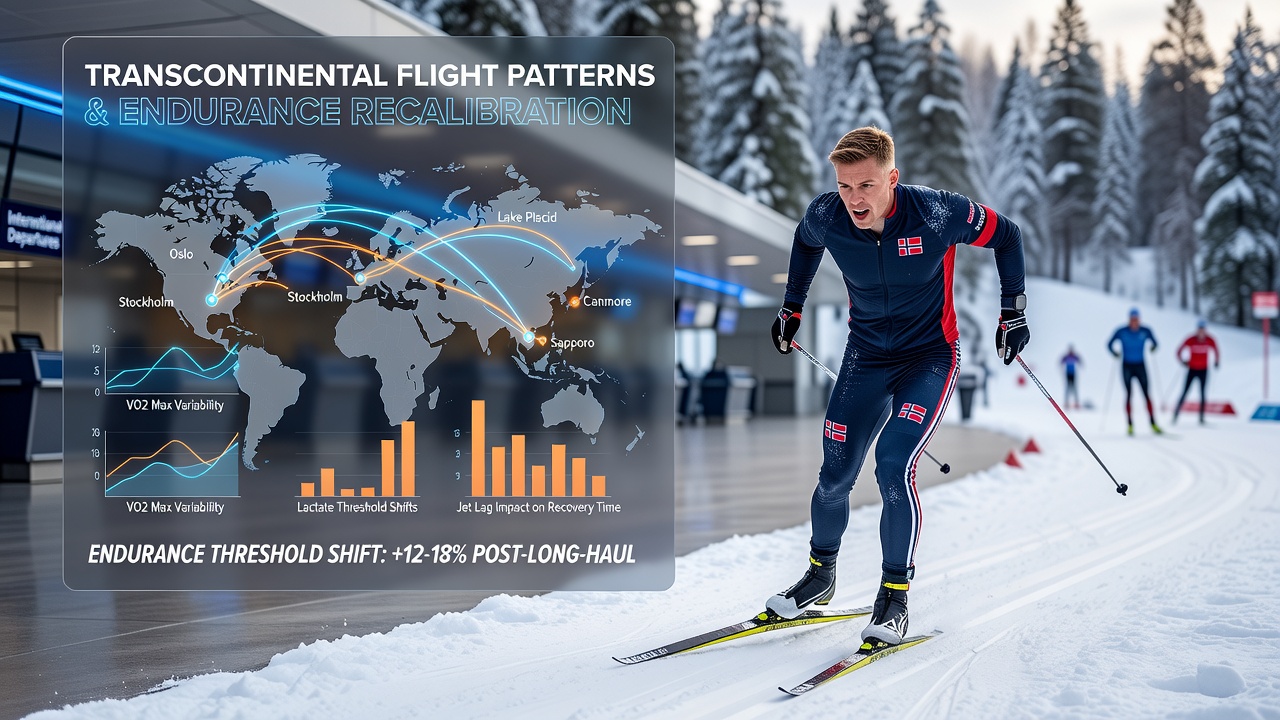
Transcontinental Journeys Reshaping Endurance Limits in World Cup Cross-Country Skiing
World Cup cross-country skiing circuits span multiple continents each season, forcing athletes to manage repeated transcontinental flights that shift time zones, disrupt sleep cycles, and alter physiological recovery patterns. Data from the International Ski Federation shows that competitors often complete between four and six long-haul journeys per winter, with routes connecting European bases to events in North America, Asia, and occasionally Australia. These movements recalibrate endurance thresholds because circadian misalignment reduces oxygen utilization efficiency and slows glycogen replenishment rates, according to physiological monitoring conducted during the 2024-2025 season.
Physiological Adjustments During Extended Travel
Observers note that jet lag effects accumulate when skiers cross more than five time zones, leading to measurable drops in VO2 max and lactate threshold during the first 48 to 72 hours after arrival. Research from the Australian Institute of Sport indicates that athletes experience a 5 to 8 percent decline in submaximal endurance capacity immediately post-flight, with partial recovery occurring only after structured light exposure and adjusted training loads. Teams therefore schedule arrival windows several days before key races, allowing melatonin regulation and hydration protocols to stabilize blood plasma volume that otherwise decreases during cabin pressure changes.
Studies tracking heart rate variability among Norwegian and Swedish national team members reveal that eastward flights produce stronger disruptions than westward ones because the body struggles more to advance its internal clock. In August 2026, preliminary findings from an ongoing multi-year project at the University of Calgary documented similar patterns in Canadian skiers returning from Asian World Cup stops, where elevated cortisol levels persisted for up to five days and correlated with reduced time-trial speeds on roller-ski tests.
Performance Data Across Recent Circuits
Performance metrics compiled by the International Ski Federation demonstrate that podium percentages drop for athletes who arrive within 72 hours of a transcontinental flight compared with those who had longer acclimatization periods. During the 2025 North American leg, skiers traveling directly from Oslo to Canmore recorded average race times 2.3 percent slower in the opening events than in subsequent races after additional rest days. These shifts appear across both sprint and distance disciplines, though distance events show larger variances because sustained aerobic output depends more heavily on stable circadian rhythms.
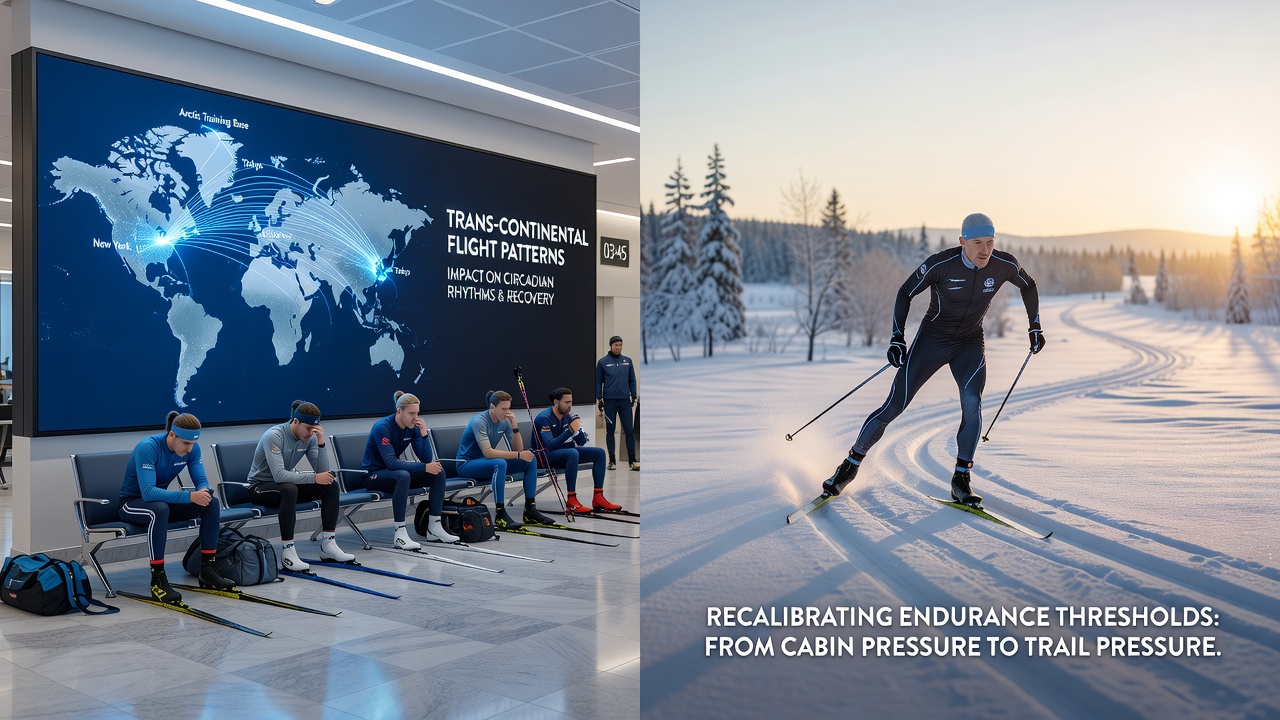
Coaches adjust interval sessions and nutrition timing to counteract these changes, often incorporating low-intensity volume work in the first two days on site. Data collected via wearable sensors shows that sleep efficiency remains below baseline for an average of four nights following a nine-hour flight, prompting teams to use light therapy boxes and controlled caffeine intake to accelerate phase shifting. The reality is that individual responses vary based on age, prior travel experience, and genetic factors influencing melatonin production.
Team Strategies and Monitoring Tools
National federations have implemented standardized recovery frameworks that combine blood biomarker tracking with subjective wellness questionnaires. Canadian and German squads, for instance, integrate these tools to decide whether an athlete should compete in the first race or focus on recovery and target later events in the same cluster. Figures from the 2024-2025 season indicate that athletes who followed individualized flight-adjusted tapering plans maintained closer to personal best endurance outputs than those adhering to standard pre-race routines.
Equipment considerations also play a role because heavier travel bags containing skis, boots, and waxing supplies add logistical strain that compounds physical fatigue. Teams now coordinate equipment shipping ahead of athlete arrivals to reduce carry-on loads and preserve energy reserves for on-snow testing once local conditions are assessed.
Conclusion
Transcontinental flight patterns continue to influence how endurance thresholds recalibrate among World Cup cross-country skiers, with measurable impacts on recovery timelines, race pacing, and seasonal rankings. Ongoing monitoring projects and refined acclimatization protocols provide teams with data-driven methods to mitigate these effects, allowing athletes to compete closer to optimal capacity despite the demands of global circuits.