Venue Conditions and Their Impact on Squad Strategies in International Cricket
Written by Henrik Sullivan · Aug 16, 2026
Venue Conditions and Their Impact on Squad Strategies in International Cricket
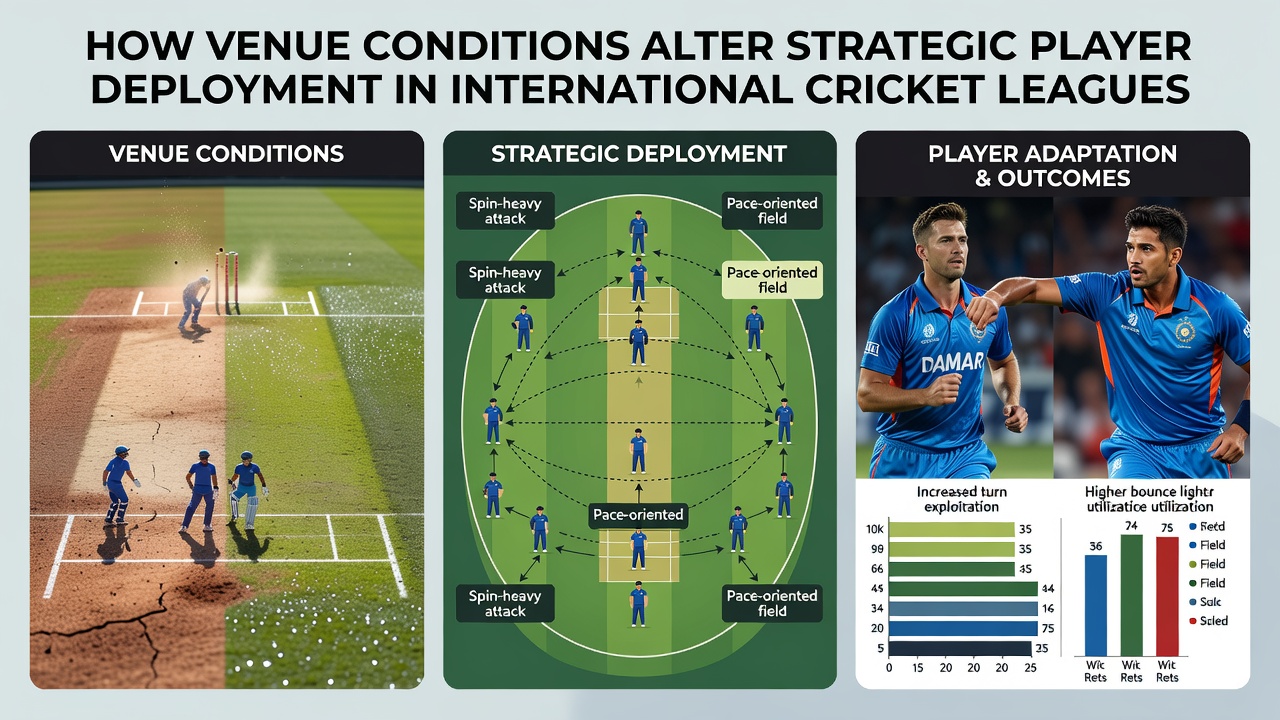
Venue conditions play a central role in how teams select and deploy players across international cricket leagues such as the Indian Premier League, Big Bash League, and Caribbean Premier League. Data from recent seasons shows that pitch composition, weather patterns, and altitude levels directly shape decisions on whether to include additional spinners, fast bowlers, or all-rounders in the starting eleven.
Pitch Composition and Bowling Options
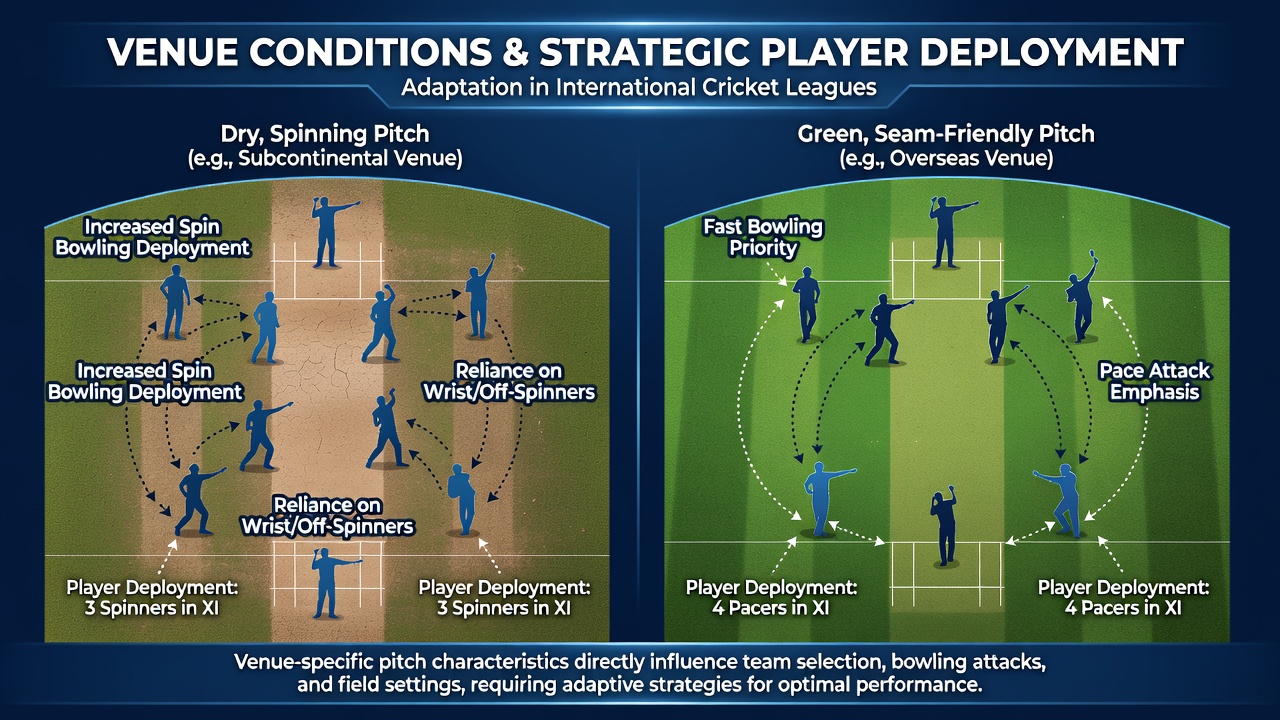
Cricket grounds feature varied soil types and grass cover that change from one location to another, and these differences lead selectors to adjust their lineups accordingly. Research compiled by the International Cricket Council indicates that venues with higher clay content retain moisture longer which favors seam bowlers early in matches, whereas drier surfaces with more sand promote turn for spinners as games progress. Teams therefore review historical match data from each ground before finalizing squads, often increasing the number of wrist spinners at locations known for assisting spin in the second innings.
Observers note that curators at certain stadiums apply specific grass lengths and rolling patterns that further alter ball behavior. In leagues held during August 2026, several franchises shifted toward including an extra pace bowler after reviewing reports on venues where overnight dew had reduced grip for spinners in evening fixtures. This adjustment reflects how even small changes in surface preparation can prompt roster modifications hours before matches begin.
Weather Patterns and Field Placement Choices
Atmospheric conditions at different venues also affect strategic deployments. High humidity levels combined with overcast skies tend to assist swing bowling, prompting captains to select players who excel at varying their seam positions. Data collected across multiple tournaments reveals that teams playing in coastal cities often carry an additional swing bowler compared with those competing at inland grounds where drier air reduces lateral movement.
Wind direction and speed represent another variable that selectors consider. At grounds where consistent crosswinds occur, teams have deployed more left-arm orthodox bowlers because the angle created by the wind enhances their natural delivery trajectory. Such patterns appear consistently in statistical summaries published by national cricket boards, and they guide pre-season planning for player acquisitions.
Altitude Effects on Player Endurance and Selection
Venues situated at higher elevations introduce distinct physical demands. Thinner air at these locations reduces oxygen availability, which can affect bowlers who rely on sustained pace throughout long spells. Studies from sports science departments at universities in Australia and South Africa show that fast bowlers experience faster fatigue rates above 1,500 meters, leading selectors to limit their overs or replace them with spinners who maintain effectiveness with less aerobic strain.
Teams competing in leagues that include high-altitude venues have therefore adjusted their squad compositions to include more all-rounders capable of contributing with both bat and ball. This approach allows flexibility when conditions shift during a match and reduces the risk of early bowler exhaustion. Records from the 2025-2026 seasons demonstrate that sides which planned for altitude variations maintained higher win percentages at those specific grounds.
Case Examples from League Schedules
One notable instance occurred during a Caribbean Premier League series where teams traveling to a venue known for its slow, low pitches replaced two frontline pacers with an additional spinner and a batting all-rounder. Match statistics later confirmed that the adjusted lineup achieved better control in the middle overs. Similar decisions appear across other competitions when venues present contrasting characteristics from one week to the next.
Selectors also examine day-night transitions because dew formation on the outfield can alter grip for bowlers later in the evening. Venues that experience rapid temperature drops after sunset often see teams prioritize players who can bowl cutters and slower deliveries effectively. These tactical shifts rely on detailed venue reports compiled by support staff and shared with coaching groups well in advance of travel.
Conclusion
Venue conditions continue to drive measurable changes in how international cricket leagues approach player deployment. Pitch surfaces, weather variables, and altitude levels each contribute distinct factors that teams analyze through data and historical performance records. As leagues expand their schedules across diverse locations, the emphasis on venue-specific preparation remains a consistent element of strategic planning.